Blog
Can neck pain cause headaches?
Sometimes, yes. A headache can start in the neck, but far more often neck pain and headache simply turn up together. Here is how they differ, what helps, and when to get help.
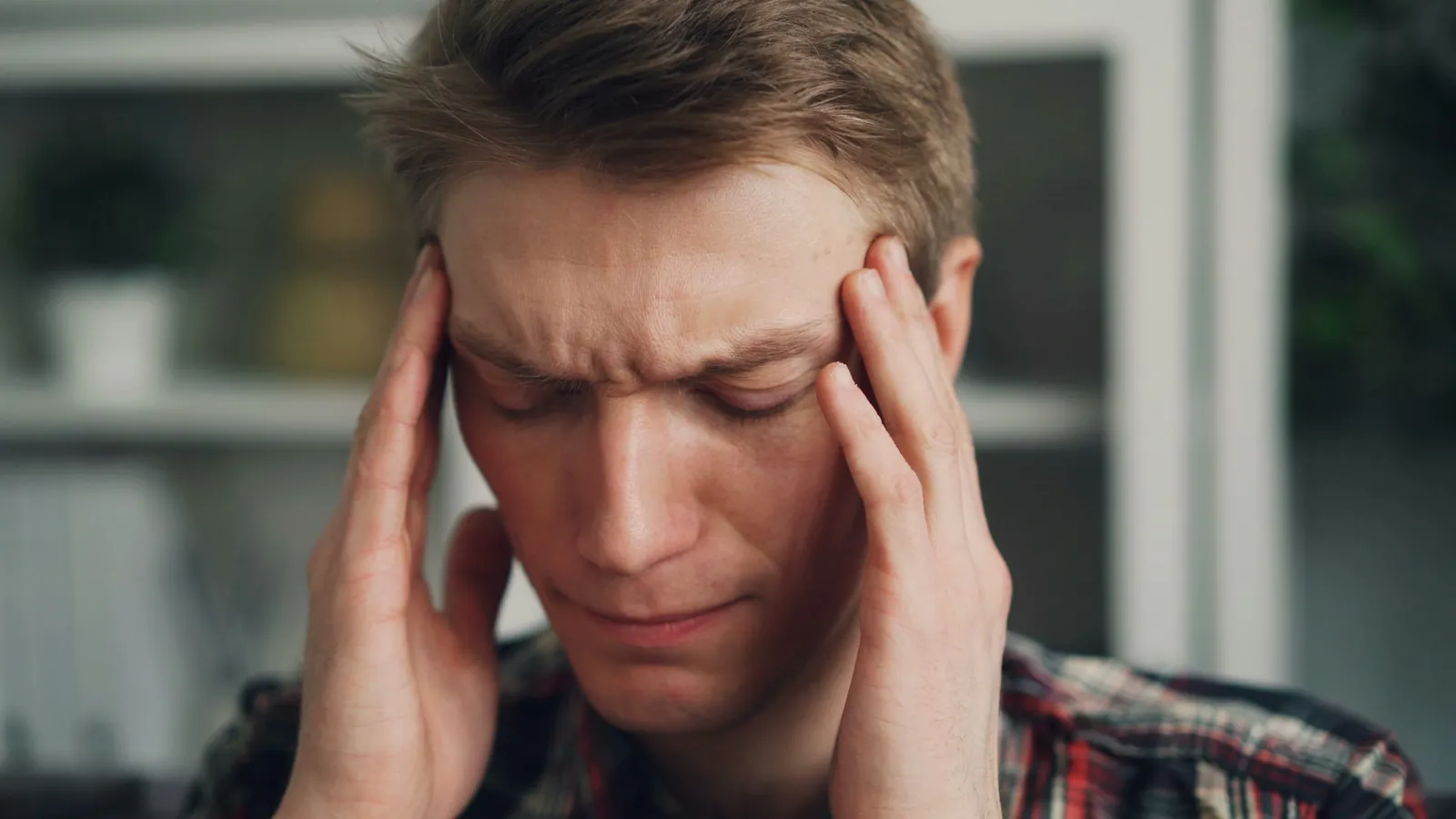
Can neck pain cause headaches? Yes, it can. Headache specialists recognise a headache that starts in the neck, called a cervicogenic headache, and NHS inform lists headaches among the symptoms neck problems can cause (NHS inform). But that is not the most common reason the two arrive together. More often, a sore neck is part of a tension-type headache or a migraine rather than the thing causing it. The difference matters, because it changes what is likely to help.
Can neck pain cause headaches? The short answer
There are three common ways neck pain and headache end up in the same day:
- The neck is the source. A problem in the joints, discs or soft tissues of the neck refers pain into the head. This is a cervicogenic headache, and by most estimates it is much less common than tension-type headache.
- They are part of the same headache. Tension-type headache sometimes spreads into or from the neck, and tender neck and scalp muscles are typical of it.
- The neck aches during migraine. Neck pain is very common in people with migraine, which does not mean the neck is the cause.
What a cervicogenic headache is
The International Classification of Headache Disorders (ICHD-3) defines cervicogenic headache as a headache caused by a disorder of the cervical spine and its bony, disc or soft tissue parts, usually but not always with neck pain (ICHD-3).
The diagnosis needs evidence of a neck problem known to cause headache, plus at least two signs that the neck is behind it. For example, the headache began when the neck problem began, it gets better as the neck gets better, neck movement is reduced and the headache is clearly provoked by testing the neck, or it disappears when a nerve in the neck is numbed with an injection.
The classification also lists features that tend to set it apart: pain that stays on one side, pain brought on by pressing on the neck muscles or by moving the head, and pain that spreads from the back of the head towards the front. It adds an important caution: these features are not unique to cervicogenic headache.
Why a neck problem can be felt in the head
The ICHD-3 notes a well-understood convergence between pain signals from the upper neck and from the trigeminal nerve, which covers much of the head and face. In practice, pain from the top of the neck can be felt in the head.
One nerve often mentioned here is the greater occipital nerve, which runs through the upper neck to the back of the head. Problems with it are associated with several common headaches, cervicogenic headache among them (Mckenzie & Hinson, 2025).
How common is it?
A 2025 mapping review of 34 publications found prevalence estimates from 0.17% to 69%, depending on where and how people were assessed. The figure reported in computer users, 64.5%, sits at the top of the range for studies that relied on questionnaires. Studies that required a diagnostic nerve block found between 0.17% and 16.1% (Mingels et al., 2025).
The figures swing so much with the method that none of them tells you much about your own headache.
Tension-type headache: the more common pairing
The WHO describes tension-type headache as pressure or tightness, often like a band around the head, sometimes spreading into or from the neck. It may be stress-related or associated with musculoskeletal problems in the neck. Episodic tension-type headache, on fewer than 15 days a month, is reported by more than 70% of some populations (WHO).
It is the most common primary headache. It is usually mild to moderate, on both sides, pressing rather than throbbing, lasts from 30 minutes to seven days, and does not get worse with routine activity such as walking. People often report marked muscle tenderness (Shah et al., 2024). The NHS adds pain on both sides of the head, face or neck, and lists stress, sleep problems and caffeine as common causes (NHS).
The line between this and a headache from the neck is blurry. The ICHD-3 says that when tender neck muscles are the cause, the headache should probably be classed as tension-type, and admits that many cases overlap and diagnosis can be challenging.
Neck pain is common in migraine too
In a population study of 797 people, 68.4% had had neck pain in the past year. Among people with a primary headache the figure was 85.7%, against 56.7% in people without headaches. It was highest in people with both migraine and tension-type headache (89.3%), then tension-type headache alone (88.4%) and migraine alone (76.2%) (Ashina et al., 2015).
As a single snapshot, it cannot show what causes what. It does show why a stiff neck during a headache does not prove the neck started it.
Does posture play a part?
The NHS lists bad posture among the common causes of headaches (NHS). The research is thinner. A small pilot study compared 20 people with chronic tension-type headache with 20 people without. The headache group had more forward head posture and more active trigger points, tender spots that reproduce pain, in the suboccipital muscles at the base of the skull (Fernández-de-las-Peñas et al., 2006).
With 40 people measured once, it shows an association, not a cause. Two larger studies that measured neck posture while people texted found no link with neck pain, as Is “text neck” real? explains, so treat posture as one possible factor rather than the explanation.
How the three usually differ
None of this is a self-test, but these patterns, drawn from the sources above, are what a clinician will ask about:
- From the neck: one side, always the same side, starting in the neck and spreading forward, set off by neck movement or by pressure on the neck, usually with a neck that does not turn as far as it used to (Al Khalili et al., 2022).
- Tension-type: both sides, pressing or tightening like a band, mild to moderate, not worse when you walk about.
- Migraine: the NHS lists a throbbing pain at the front or on one side, feeling or being sick, and finding light or noise painful as signs of a different type of headache, such as migraine, worth seeing a GP about (NHS).
What about dizziness?
Some people with neck pain also feel dizzy or unsteady, which the research calls cervicogenic dizziness. But a 2019 review found only eight studies with 225 patients, no accepted diagnostic criteria, and a diagnosis that mostly rests on ruling out other causes (Knapstad et al., 2019). A 2022 review of 13 trials with 898 patients found moderate-quality evidence that manual therapy reduced dizziness (De Vestel et al., 2022).
Dizziness has many causes, from the inner ear to blood pressure. NHS inform advises contacting your GP practice if you develop dizziness with neck pain, and the NHS advises seeing a GP if dizziness keeps coming back or comes with changes in hearing or vision, or numbness (NHS).
What helps when the neck is involved
For headaches from the neck, one trial stands out. 200 people with cervicogenic headache were given manipulative therapy, a low-load exercise programme, both, or were in a control group, with treatment lasting six weeks. A year later, both manipulative therapy and exercise had reduced how often and how badly headaches came. Combining them was not significantly better than either alone, though 10% more people gained relief with the combination (Jull et al., 2002).
A 2026 review of 29 trials was more cautious. It found low-certainty evidence that manual therapy reduces headache intensity in the short term, but not at twelve months, and only low-certainty evidence, from two trials with 116 people, that exercise alone may reduce headache compared with usual care (Martins et al., 2026).
For desk workers, there is one more lead. In a trial of 198 office workers with frequent neck and shoulder pain, two minutes a day of strengthening with elastic tubing, five days a week for ten weeks, reduced headache frequency by about 0.64 days a week compared with a group given health information, a 43% drop from where they started. The intensity and length of the remaining headaches did not change (Andersen et al., 2011). Headache was a secondary outcome, so it is a lead rather than proof. There is more on that trial in Is two minutes of exercise enough?.
For tension-type headache with neck pain, the NHS suggests relaxing activities such as exercise, yoga and massage, a low, firm pillow, and heat or cold packs (NHS). See sleeping position and pillow for neck pain and Does massage help neck pain?.
If you want to keep your neck moving, our neck stretches page shows one exercise from the app. If stress is part of the picture, Can stress cause back pain? looks at how stress and muscle tension are linked.
Small habits at a desk
Several everyday headache triggers on the NHS list are desk habits: straining your eyes at a screen for a long time, skipping meals, not drinking enough, and stress (NHS). For the neck, NHS inform suggests moving it for short periods every hour and not staying in one position for too long.
In practice: set up your screen so you are not craning towards it (how to set up your monitor), build short breaks into the day (microbreaks), and keep a headache diary, which the NHS suggests for finding triggers. Go easy on painkillers too: the NHS warns that taking them too often or for too long can cause headaches of their own.
When to see a doctor
Most headaches are not serious. But the NHS says to call 999 or go to A&E if a headache:
- started suddenly and is extremely painful;
- comes with numbness or weakness in the body or face, a seizure, drowsiness or confusion;
- comes with difficulty speaking, balancing, walking or remembering things, or loss of vision;
- follows a head injury within the last three months;
- comes with a very high temperature, a stiff neck, bright lights bothering you, or a rash that does not fade when a glass is rolled over it.
Ask for an urgent GP appointment or contact 111 if a headache comes with vision or eye problems, is triggered or made worse by coughing, sneezing, bending down or exercise, comes with vomiting, or comes with jaw pain when eating or a tender scalp. See a GP if you get headaches regularly or they are not getting better (NHS).
For the neck itself, NHS inform advises contacting your GP practice urgently if neck pain comes with a severe headache, with worsening clumsiness, numbness, pins and needles or weakness in the arms, or with problems with balance or walking. These warning signs are sometimes called red flags, and there is more on them in neck pain from desk work.
What to take from it
- Neck pain can cause headaches, but tension-type headache or migraine with a sore neck is more common.
- The features overlap. One-sided pain set off by neck movement points towards the neck; only an examination can tell.
- Exercise and manual therapy have some support for headaches from the neck, more certain in the short term.
- Sudden, severe or unusual headaches need a doctor first.
Bavelu’s neck and shoulder sessions are designed and filmed by physiotherapists, with desk routines of two to four minutes for the gaps in your day.
Questions people ask
How do I know if my headache is coming from my neck?
The international headache classification lists features that point towards the neck: pain that stays on one side, spreads from the back of the head to the front, and is brought on by neck movement or pressure on the neck muscles, often with reduced neck movement. It also says these features are not unique to neck headaches. Only a clinician who examines you can tell, and sometimes even then it is difficult.
Can a stiff neck cause a headache?
It can. NHS inform lists headaches among the symptoms neck problems can cause, and the WHO describes tension-type headache as sometimes spreading into or from the neck. A stiff neck together with a headache and a very high temperature, or with bright lights bothering you, is different: the NHS says to call 999 or go to A&E.
Can neck pain cause dizziness?
Dizziness linked to neck problems, called cervicogenic dizziness, is described in the research, but there are no agreed diagnostic criteria and it is usually diagnosed by ruling out other causes first. NHS inform advises contacting your GP practice if you develop dizziness with neck pain.
Do neck exercises help headaches?
In a trial of 200 people with headaches from the neck, a low-load exercise programme reduced how often and how badly headaches came, and the effect was still there a year later. In office workers with neck and shoulder pain, two minutes a day of strengthening reduced headache frequency by 43% from where people started, but headache was a secondary outcome. A 2026 review of 29 trials found only low-certainty evidence for exercise alone.
When is a headache with neck pain an emergency?
The NHS says to call 999 or go to A&E if a headache starts suddenly and is extremely painful, comes with numbness or weakness, confusion, loss of vision, trouble speaking or walking, or a very high temperature with a stiff neck. NHS inform also advises contacting your GP practice urgently if neck pain comes with a severe headache.
Terms on this page
- Cervical spineThe seven vertebrae of the neck, C1 to C7, from the base of the skull to the top of the chest.
- Greater occipital nerveThe nerve that runs up through the back of the neck to supply the back of the scalp.
- Suboccipital musclesFour small, deep muscles between the back of the skull and the top two neck vertebrae.
- Red flagsWarning signs that back or neck pain could have a serious cause and needs a doctor promptly.
Sources
- International Headache Society. ICHD-3, 11.2.1 Cervicogenic headache.
- Al Khalili Y, Ly NK, Murphy PB. Cervicogenic Headache. StatPearls (NCBI Bookshelf), 2022.
- Mckenzie D, Hinson MR. Occipital Nerve Block. StatPearls (NCBI Bookshelf), 2025.
- Mingels S, Granitzer M, Jull G, Dankaerts W. The occurrence of cervicogenic headache: a mapping review. Musculoskeletal Science & Practice, 2025.
- World Health Organization. Headache disorders fact sheet.
- Shah N, Asuncion RMD, Hameed S. Muscle Contraction Tension Headache. StatPearls (NCBI Bookshelf), 2024.
- Ashina S et al. Prevalence of neck pain in migraine and tension-type headache: a population study. Cephalalgia, 2015.
- Fernández-de-las-Peñas C et al. Trigger points in the suboccipital muscles and forward head posture in tension-type headache. Headache, 2006.
- Knapstad MK, Nordahl SHG, Goplen FK. Clinical characteristics in patients with cervicogenic dizziness: a systematic review. Health Science Reports, 2019.
- De Vestel C et al. Systematic review and meta-analysis of the therapeutic management of patients with cervicogenic dizziness. Journal of Manual & Manipulative Therapy, 2022.
- Jull G et al. A randomized controlled trial of exercise and manipulative therapy for cervicogenic headache. Spine, 2002.
- Martins L, Collet P, Lafrance S, Demont A. Efficacy of nonsurgical interventions for the management of adults with cervicogenic headache: a systematic review and meta-analyses. Annals of Physical and Rehabilitation Medicine, 2026.
- Andersen LL et al. Effect of brief daily exercise on headache among adults: secondary analysis of a randomized controlled trial. Scandinavian Journal of Work, Environment & Health, 2011.
- NHS. Headaches. Last reviewed 17 April 2024.
- NHS. Tension headaches.
- NHS. Dizziness. Last reviewed 21 April 2023.
- NHS inform. Neck problems. Last updated 3 November 2026.
This page explains a topic in general terms. It is not a diagnosis and does not replace a doctor or physiotherapist. If something hurts badly, keeps getting worse or comes with numbness, weakness or fever, see a doctor.
