Blog
Does massage help neck pain?
Massage can ease a sore neck for a while, and trials back that up. The harder questions are how long the effect lasts and whether it does more than exercise.
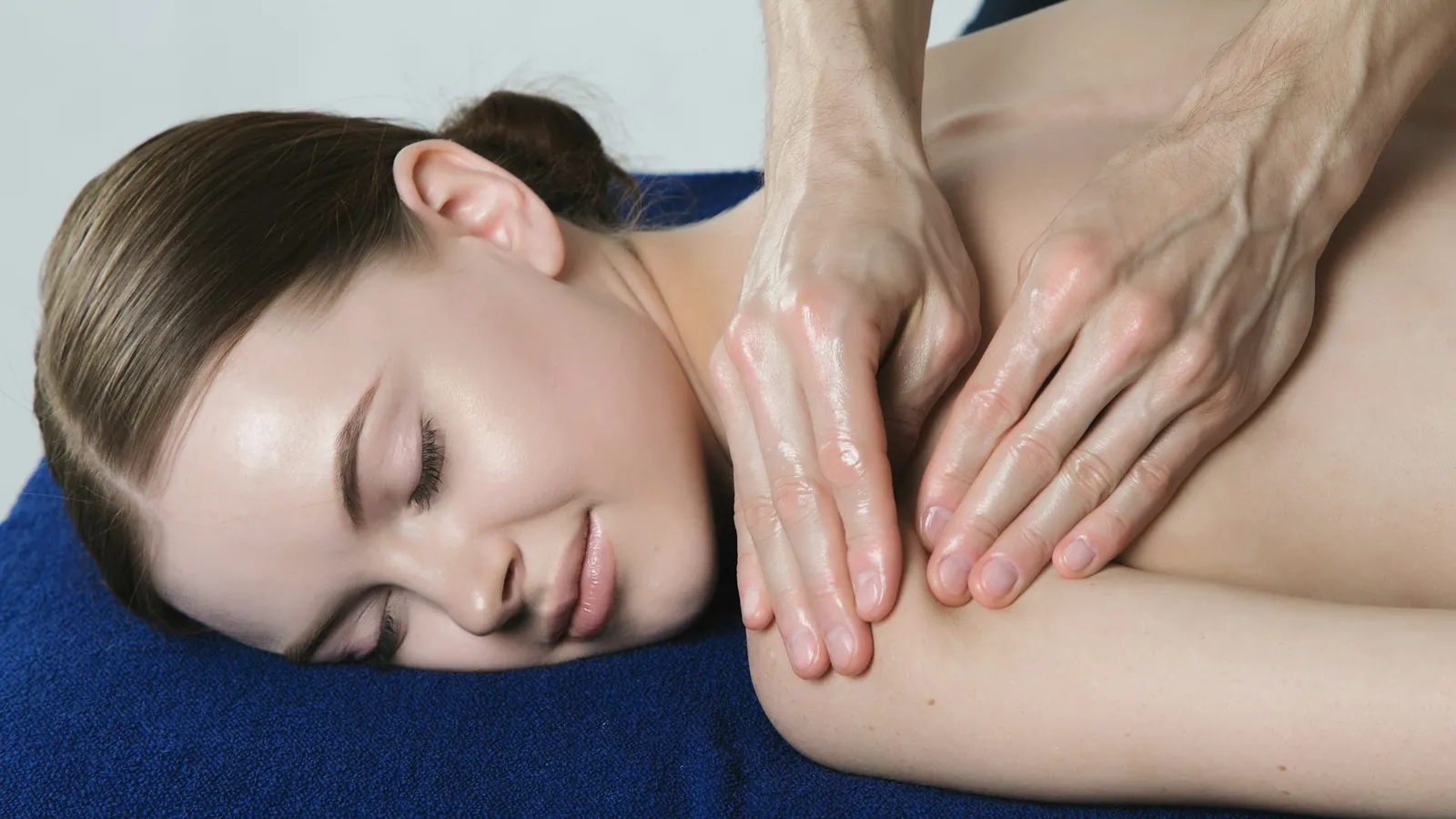
Does massage help neck pain? In the short term, it can. Several trials and reviews find that massage eases neck pain straight after treatment and for a few weeks, though not every review agrees. Most of the evidence is low quality, the benefit tends to fade once the sessions stop, and massage has not done better than other active treatments such as exercise. A fair way to see it: massage can be a pleasant, short-lived help that makes it easier to keep moving, not a fix on its own.
Does massage help neck pain? What the reviews say
The main summary of the evidence is a Cochrane review of massage for neck pain without a specific medical cause. It found 15 trials and rated every one of them low or very low quality. There was very low-quality evidence that some techniques, such as traditional Chinese massage and classical massage, improved function and tenderness more than a control or placebo, and that massage beat education in the short term for how much the pain bothered people.
Only 4 of the 15 trials described the technique adequately, and most measured the results straight after treatment, which the authors say is too early to judge real change. Their conclusion was blunt: no recommendations for practice can be made, because the effect of massage on neck pain remains uncertain (Patel et al., 2012).
Later reviews point the same way:
- A meta-analysis of 15 randomised trials found that massage relieved pain better than inactive treatments immediately afterwards, in a comparison based on 153 people. It found no valid evidence that massage improved how well the neck worked, and not enough evidence about what happened later (Cheng & Huang, 2014).
- A review of 26 trials with 2,565 people across several muscle and joint problems found that massage on its own reduced pain in the short term, compared with no treatment, for shoulder pain and knee arthritis, but not for neck pain or low back pain. Against other active treatments, no clear benefit showed up (Bervoets et al., 2015).
- A 2024 update compared massage with standard treatments in 42 studies and 2,656 people. Two thirds of the studies were at high risk of bias, and the effect on pain varied depending on what massage was compared with. The authors called for longer trials that give an adequate dose of massage (Lee et al., 2024).
Why the answers are so mixed
“Massage” covers very different things, from Chinese tuina to classical Western massage and myofascial release. The trials compared it with anything from no treatment to exercise or acupuncture, and most were small. The consistent part is a short-term effect compared with doing nothing, and no clear advantage over other active treatments.
Does massage help neck and shoulder pain?
Neck pain from desk work rarely stays in the neck. It often spreads across the top of the shoulders, where the trapezius and the levator scapulae run, and sometimes down between the shoulder blades.
A meta-analysis of 12 trials that its authors rated as high quality looked at both areas. Compared with inactive treatments, massage had immediate effects on neck pain and on shoulder pain, and a short-term effect on shoulder pain. Compared with other active treatments, it was not better for either, and it did not improve how well the shoulder worked (Kong et al., 2013).
Hand-held percussion devices, often called massage guns, have even less behind them. In a trial with 50 people who had chronic neck pain and tender trigger points in the upper trapezius, six short sessions of percussive massage over three weeks were compared with neck and shoulder stretching. Both groups improved in pain and disability, and resting pain did not differ significantly between them (Areeudomwong et al., 2025). Trigger points like these are part of what is called myofascial pain syndrome.
If your pain sits mostly around the shoulder or between the blades, see shoulder pain from computer work and pain between the shoulder blades.
How long does massage help neck pain?
This is where the evidence is clearest, and least flattering.
In a US trial, 64 people with chronic neck pain either had up to 10 massages over 10 weeks or were given a self-care book. At 10 weeks, 39% of the massage group had a clinically meaningful improvement in neck disability, against 14% of the book group, and 55% against 25% had a meaningful drop in how much their symptoms bothered them. But the differences between the groups were largest at four weeks and had disappeared by 26 weeks (Sherman et al., 2009).
The same team then asked how much massage it takes. They assigned 228 people with chronic neck pain to one of five four-week courses, ranging from 30-minute visits two or three times a week to 60-minute visits once, twice or three times a week, or to a waiting list. At five weeks, the 30-minute sessions were not significantly better than waiting, however often they were given. Only 60-minute sessions two or three times a week made a meaningful improvement significantly more likely (Sherman et al., 2014).
They followed 179 of these people for longer. By 12 and 26 weeks, the original courses no longer differed from each other. Six extra weekly hour-long “booster” massages improved neck function at 12 weeks, but by 26 weeks that difference was no longer significant (Cook et al., 2015).
Put together: massage helped during the course and for some weeks after it, when the dose was high enough, and the gap had faded by six months. If you are weighing up paid treatment, our page on how much physiotherapy costs may help you compare options.
Is massage better than exercise for neck pain?
Not on current evidence. Several of the reviews above found no clear advantage for massage over other active treatments. A review of Western massage techniques, covering 8 trials published between 2012 and 2021, reached the same conclusion: no type of massage beat other active therapies, and every included study measured only immediate or short-term effects. One finding stands out, though: connective tissue massage added to exercise improved pain more than exercise alone in the short term (Mete et al., 2023).
Exercise has a deeper base for long-lasting neck pain. A Cochrane review of 27 trials found moderate-quality evidence that strengthening the neck, shoulders and upper back reduces pain in chronic neck pain, and low-quality evidence that stretching alone may not change pain or function. It found no high-quality evidence for any exercise, so some uncertainty remains (Gross et al., 2015).
The amounts can be small. In a Danish trial with 198 office workers, two minutes of strengthening on workdays reduced neck and shoulder pain by 1.4 points on a 10-point scale over ten weeks, compared with health information alone (Andersen et al., 2011). We look at that trial in Is two minutes of exercise enough?, and at how the two approaches compare in Stretching or strengthening?
Guidance for the lower back makes a similar point. NICE says manual therapy, including massage, can be considered for low back pain, but only as part of a treatment package that includes exercise (NICE NG59). That guideline is about the back, but the neck research points the same way: massage looks most sensible as an addition to moving more, not a replacement.
Is massage safe for a sore neck?
The risks reported in trials are mostly minor, although many trials did not check. In the Cochrane review, only 4 of 15 trials reported side effects. All four reported pain after treatment, and in one of them 22% of participants had low blood pressure afterwards (Patel et al., 2012). The 2009 US trial reported no serious adverse events, and the 2024 update found that massage may not raise the risk of minor adverse events compared with other standard treatments (Lee et al., 2024).
If you have been diagnosed with a neck condition or have had recent neck surgery, NHS inform advises following the advice of your own healthcare professional (NHS inform).
What helps a desk worker’s neck between massages?
The NHS advice for ordinary neck pain is mostly about keeping the neck moving. It suggests paracetamol or ibuprofen if you need them, a low, firm pillow, heat or cold packs and neck flexibility exercises, and it warns against keeping your neck in the same position for a long time, for example when sitting at a desk (NHS). NHS inform adds moving your neck for short periods every hour and staying generally active.
For a desk worker, that turns into a few habits:
- Break up long spells at the screen. Our guide to microbreaks looks at how often to move.
- Choose movement for where it hurts. Our pages on neck stretches, shoulder stretches and the levator scapulae stretch each show one exercise from the app. Whether stretching helps is a fair question, and we weigh the evidence in Do stretches help neck pain?
When to see a doctor about neck pain
According to NHS inform, most new neck problems settle within eight weeks. Contact your GP practice urgently, or phone 111 if it is closed, if:
- you feel clumsiness in your hands, or numbness, pins and needles or weakness in one or both arms that is getting worse;
- you have had problems with your balance or walking since the neck pain started;
- your neck pain comes with a severe headache.
Contact your GP practice if you feel generally unwell with the neck pain, if it started while you were ill with another condition such as rheumatoid arthritis or cancer, or if you develop blurred vision, ringing in your ears or dizziness (NHS inform). Warning signs like these are what doctors call red flags, and they are a reason to get checked rather than book a massage.
The NHS also advises seeing a GP if the pain or stiffness does not go away after a few weeks, painkillers have not worked, you are worried, or you have other symptoms such as pins and needles or a cold arm (NHS). There is more on causes and warning signs on our page about neck pain from desk work.
So, does massage help neck pain?
- In the short term, probably yes: trials found less pain straight after treatment and for some weeks, compared with no treatment.
- The evidence is mostly low quality, and in the trials that followed people for six months, the effect had faded by then.
- Massage has not beaten other active treatments, and the strongest evidence for long-lasting neck pain is for strengthening.
- If you like it, it can sit alongside regular movement rather than replace it.
Bavelu’s sessions for the neck, shoulders and upper back are designed and filmed by physiotherapists, with desk routines of two to four minutes for the hours in between.
Questions people ask
How long does the effect of a neck massage last?
In a US trial with 64 people with chronic neck pain, the difference between massage and a self-care book was largest at four weeks and gone by 26 weeks. A later trial found that six extra weekly massages helped neck function at 12 weeks, but the difference was no longer significant at 26 weeks. Most other trials only measured the effect straight after treatment.
Is massage or exercise better for neck pain?
Reviews have not found massage to be better than other active treatments. For long-lasting neck pain, a Cochrane review found moderate-quality evidence for strengthening the neck, shoulders and upper back, while the evidence for massage is mostly low quality. One review found that adding a type of massage to exercise helped pain more than exercise alone in the short term.
How often do you need a massage for neck pain to help?
In a trial with 228 people with chronic neck pain, 30-minute massages two or three times a week for four weeks were not significantly better than a waiting list. Only 60-minute massages two or three times a week made a meaningful improvement more likely. That is one trial, and it cannot tell you what is right for you.
Do massage guns help neck pain?
There is very little research. In one trial with 50 people who had chronic neck pain and trigger points in the upper trapezius, six short sessions with a hand-held percussion device over three weeks did no better than neck and shoulder stretching for resting pain. Both groups improved, and the trial was small and short.
Can a massage make neck pain worse?
Some people feel sore afterwards. In a Cochrane review, every trial that reported side effects listed pain after treatment, and one found low blood pressure in 22% of participants. A US trial that checked found no serious adverse events. If neck pain comes with numbness, weakness, balance problems or a severe headache, see a doctor before booking a massage.
Terms on this page
- TrapeziusThe large muscle over the back of the neck and shoulders, and the most common seat of desk-work neck tension.
- Levator scapulaeThe strap-like muscle from the side of the neck to the upper corner of the shoulder blade.
- Myofascial pain syndromeRegional muscle pain attributed to trigger points, the tender 'knots' that can refer pain elsewhere.
- Red flagsWarning signs that back or neck pain could have a serious cause and needs a doctor promptly.
- FasciaThe connective tissue that wraps, separates and links muscles, organs and other structures.
Sources
- Patel KC, Gross A, Graham N, Goldsmith CH, Ezzo J, Morien A, Peloso PM. Massage for mechanical neck disorders. Cochrane Database of Systematic Reviews, 2012.
- Cheng YH, Huang GC. Efficacy of massage therapy on pain and dysfunction in patients with neck pain: a systematic review and meta-analysis. Evidence-Based Complementary and Alternative Medicine, 2014.
- Bervoets DC, Luijsterburg PA, Alessie JJ, Buijs MJ, Verhagen AP. Massage therapy has short-term benefits for people with common musculoskeletal disorders compared to no treatment: a systematic review. Journal of Physiotherapy, 2015.
- Lee H et al. Massage for neck pain contrasted against standard (non-surgical) treatment: a systematic review update. Journal of Bodywork and Movement Therapies, 2024.
- Kong LJ, Zhan HS, Cheng YW, Yuan WA, Chen B, Fang M. Massage therapy for neck and shoulder pain: a systematic review and meta-analysis. Evidence-Based Complementary and Alternative Medicine, 2013.
- Areeudomwong P et al. Short-term effect of percussive massage therapy for chronic neck pain patients with active myofascial trigger points: a randomized trial. Journal of Chiropractic Medicine, 2025.
- Sherman KJ, Cherkin DC, Hawkes RJ, Miglioretti DL, Deyo RA. Randomized trial of therapeutic massage for chronic neck pain. Clinical Journal of Pain, 2009.
- Sherman KJ et al. Five-week outcomes from a dosing trial of therapeutic massage for chronic neck pain. Annals of Family Medicine, 2014.
- Cook AJ, Wellman RD, Cherkin DC, Kahn JR, Sherman KJ. Randomized clinical trial assessing whether additional massage treatments for chronic neck pain improve 12- and 26-week outcomes. The Spine Journal, 2015.
- Mete O, Kaya DO, Keskin M, Celenay ST. Western massage therapies in the management of neck pain: a systematic review. Journal of Manipulative and Physiological Therapeutics, 2023.
- Gross A et al. Exercises for mechanical neck disorders. Cochrane Database of Systematic Reviews, 2015.
- Andersen LL et al. Effectiveness of small daily amounts of progressive resistance training for frequent neck/shoulder pain: randomised controlled trial. Pain, 2011.
- NICE. Low back pain and sciatica in over 16s: assessment and management (NG59). Recommendations.
- NHS inform. Neck problems. Last updated 3 November 2026.
- NHS. Neck pain. Last reviewed 27 April 2023.
This page explains a topic in general terms. It is not a diagnosis and does not replace a doctor or physiotherapist. If something hurts badly, keeps getting worse or comes with numbness, weakness or fever, see a doctor.
