Exercises · Wrists
Wrist stretches for computer and mouse users
Long hours on a mouse and keyboard are linked more closely with hand and wrist symptoms than with neck pain. This two-part stretch from the app's Between Calls session works the palm side and then the back of the forearm.
Forearm Stretch
A wrist and forearm stretch - a must after hours with a mouse and keyboard.
- 1:27
- Anywhere
- Wrists
- Forearms
Move slowly. Stop if it hurts, or if you feel tingling or numbness.
-
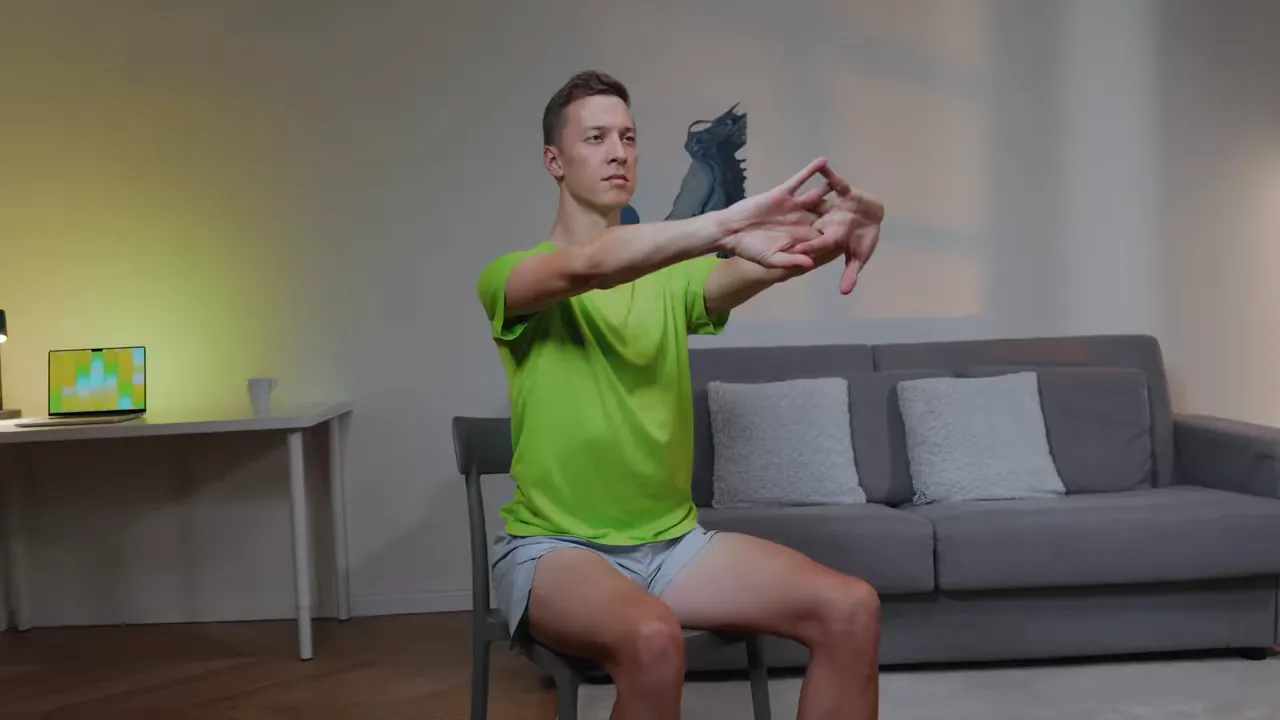
Step 1: Stretch one arm out in front, palm facing forward.
Keep: Stretch one arm out in front, palm facing forward.
Avoid: Palm not facing forward
-
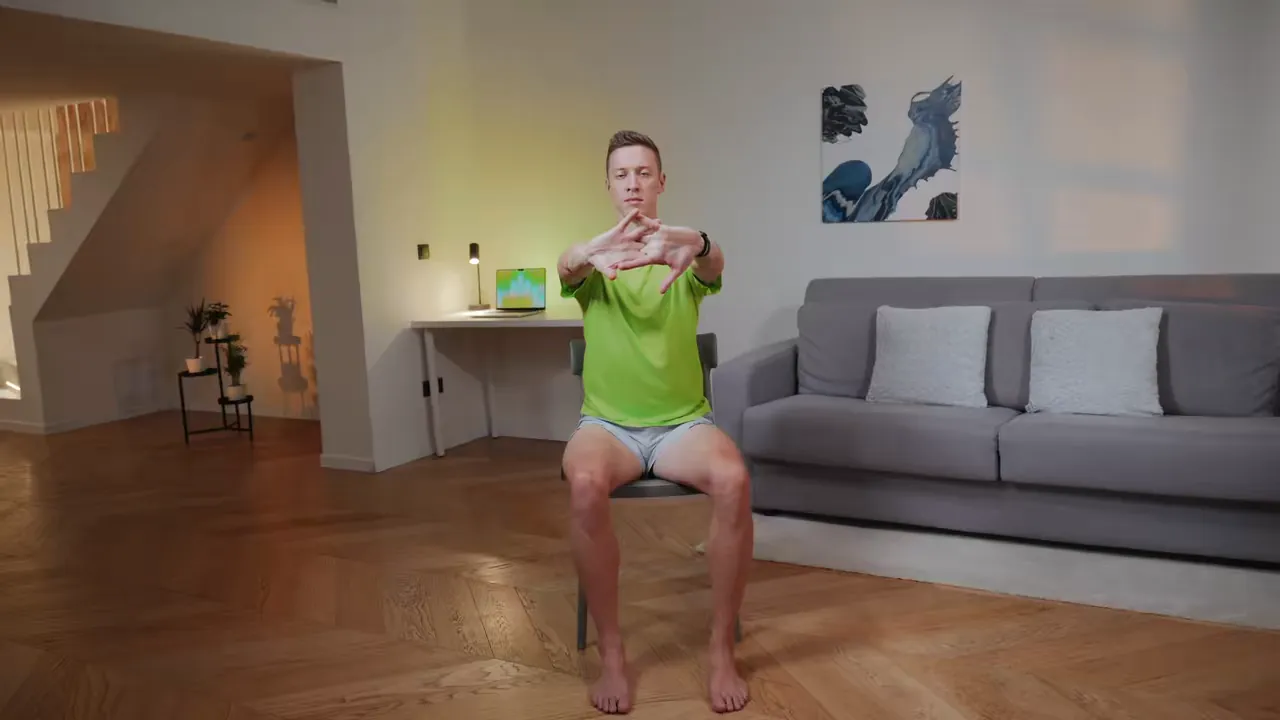
Step 2: Gently draw the fingers back with the other hand.
Keep: Draw the fingers back gently with the other hand.
Avoid: Yanking the fingers back
-
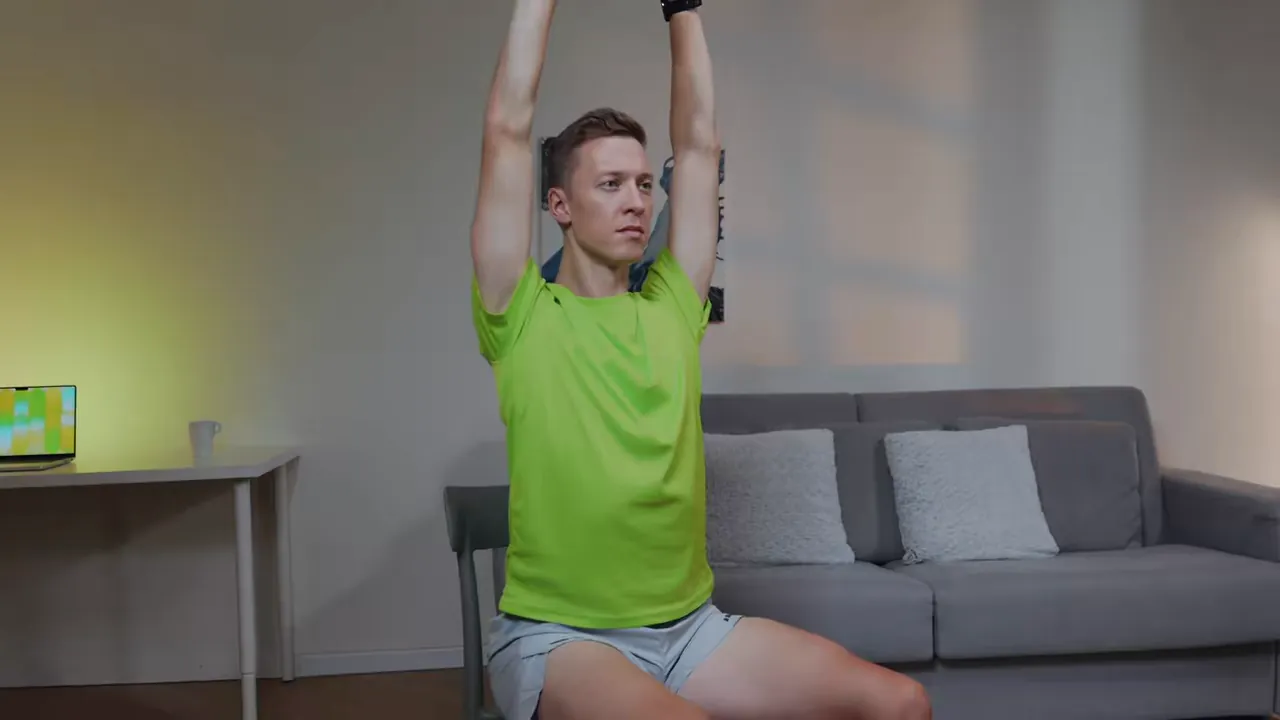
Step 3: Then turn the palm down and draw the back of the hand in.
Keep: Turn the palm down and draw the back of the hand in, just as gently.
Avoid: Doing only the first halfThe palm-down half stretches the other side of the forearm, so the exercise is not finished without it.
-
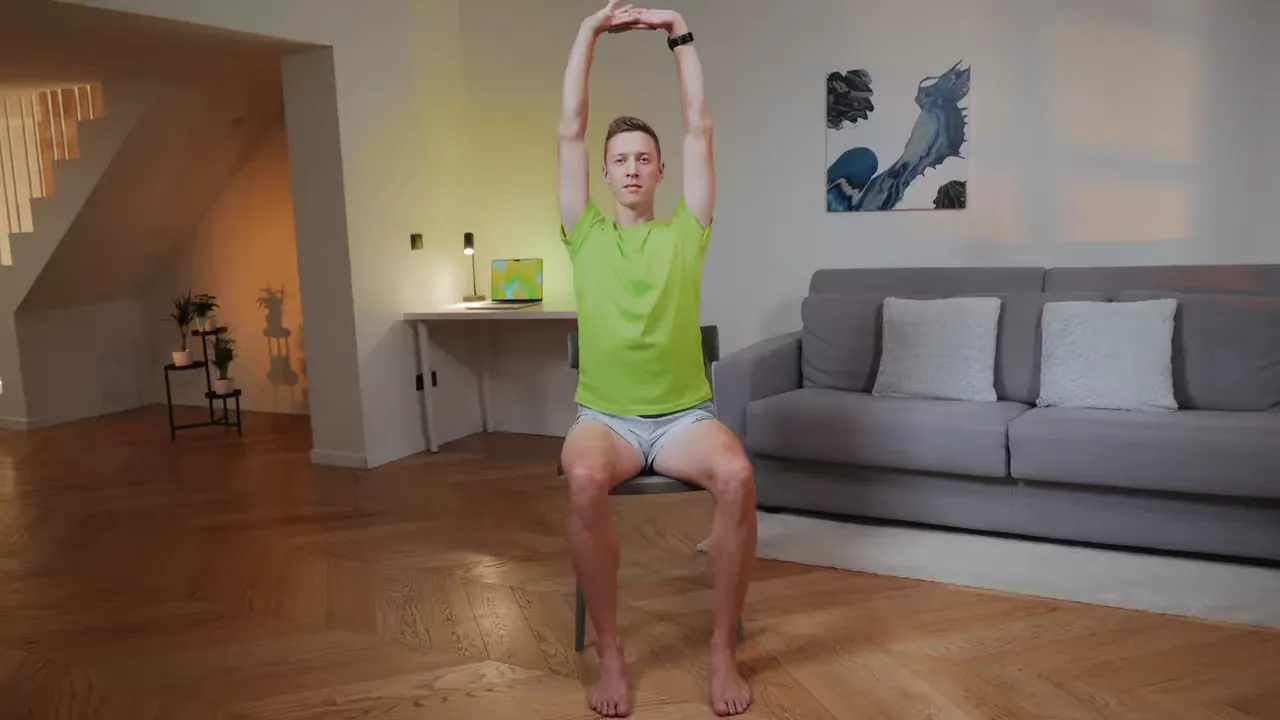
Step 4: Switch hands.
Keep: Switch hands, even if only your mouse hand feels it.
Avoid: Doing one arm only
Stills from the exercise video in the Bavelu app, with physiotherapist Mgr. Lukáš Kučera.
How it should feel
In the first half you should feel a gentle stretch along the palm side of the forearm. In the second half, once the palm is turned down, the stretch moves to the back of the forearm. Then the other arm does the same.
Gentle pullRight
You should feel a gentle stretch, and it should not be sore or uncomfortable.
Sharp pain, tingling or numbnessStop
Tingling or numbness in the fingers during the stretch is a reason to stop.
Forearm Stretch is one of 3 exercises in Between Calls
The other 2 are in the app, guided on video by a physiotherapist. The whole session takes about 5 minutes.
- Neck Half Circles 1:27 · in the app
- Side Bends 1:43 · in the app
- Forearm Stretch On this page

Wrist stretches are an easy thing to fit into a day at a computer, because you do not have to stand up, change clothes or even stop talking. The one on this page is a wrist and forearm stretch in two halves: first the palm side of the forearm, then the back of it, and then the other arm.
Below is why wrists and forearms ache after computer work, what this stretch should feel like, what the research says stretching at a desk can and cannot do, and the symptoms that need a doctor instead.
Why wrists and forearms ache after computer work
For the hand and arm, the clearest risk factor in the research is time, especially time on the mouse.
A review of nine long-term studies of office workers, six of them rated high quality, found moderate evidence that the more hours people spent using a mouse, the more likely they were to develop hand and arm symptoms, with signs of a dose-response relationship. The links were stronger for the hand and arm than for the neck and shoulders, and stronger for mouse use than for keyboard use or total computer time (IJmker et al., 2007).
A study that followed 2,576 computer users found the same pattern from another angle. Computer use for almost the whole working day more than doubled the odds of new hand and wrist symptoms (odds ratio 2.3), while it did not predict neck symptoms. Having had symptoms before, and having little influence over your own work, also predicted hand and wrist trouble (Jensen, 2003).
The NHS describes repetitive strain injury as pain that may feel burning, aching or throbbing, sometimes with tingling or numbness, caused by repeated use of a body part such as the forearm, wrist or hand. Typing is one of the activities it lists (NHS). Programmers and graphic designers are two groups who spend long days on a keyboard and mouse, and our pages on those jobs look at their research in more detail.
Is it carpal tunnel syndrome?
Probably not, but it is worth knowing the signs. The NHS lists numb hands, tingling or pins and needles, an ache in the fingers, hand or arm, and a weak thumb or trouble gripping. Risk factors include pregnancy, being overweight, and work that means repeatedly bending the wrist or gripping hard (NHS).
Computer work does not look like a major cause. A Danish study that followed 5,658 trade union members for a year found that possible carpal tunnel symptoms, confirmed at interview, were uncommon: 4.8% at the start. Using a mouse for more than 20 hours a week was linked with a higher risk, but keyboard use was not, and the authors concluded that computer use does not pose a severe occupational hazard for it (Andersen et al., 2003).
If you do have numbness or tingling in your fingers, a stretch is not the answer to it. A Cochrane review of 16 trials of exercise and mobilisation for carpal tunnel syndrome found only limited, very low-quality evidence of benefit (Page et al., 2012). See a GP instead.
What this wrist stretch should feel like
In the first half you should feel a gentle stretch along the palm side of the forearm. In the second half, once the palm is turned down, the stretch moves to the back of the forearm. Then the other arm does the same.
NHS inform describes the right level for a hand and wrist stretch well: you should feel a gentle stretch, and it should not be sore or uncomfortable (NHS inform). Tingling or numbness in the fingers during the stretch is a reason to stop.
Mistakes that break the steps above:
- Yanking the fingers back. The steps say to draw them back gently, and the same goes for the back of the hand.
- Doing only the first half. The palm-down half stretches the other side of the forearm, so the exercise is not finished without it.
- Doing one arm only. The last step is to switch hands, even if only your mouse hand feels it.
Do wrist stretches help at work?
The evidence for wrist stretches on their own is thin, and one of the few field trials of stretching at a keyboard ran into a very human problem.
In a field study of data-entry workers, adding four 5-minute breaks to the usual two 15-minute breaks reduced discomfort and eyestrain, and work output held up because people typed faster. Half the workers were also asked to do brief stretches during their breaks. Only 51 completed the questionnaires, and those in the stretching group stretched in just 25% of their usual breaks and 39% of the extra ones. With so little stretching done, the researchers could not show any effect from it (Galinsky et al., 2007).
A Cochrane review of workplace changes for office workers rated the evidence that extra breaks reduce forearm, wrist and hand discomfort as very low quality, based on two studies of data-entry workers (Hoe et al., 2018).
So the break itself may matter at least as much as the stretch. UK HSE guidance for screen users says short breaks taken often are better than longer ones taken rarely, for example 5 to 10 minutes every hour rather than 20 minutes every 2 hours, and that a break should let you get up and move around, or at least stretch and change posture (HSE). A stretch is a good reason to take your hand off the mouse. The guide to microbreaks has ideas for making those breaks stick.
Your setup matters too
HSE’s basic layout puts the keyboard just below elbow height and the mouse in line with your elbow, and for laptops it recommends a separate keyboard and mouse so the screen can be raised (HSE). The desk height calculator gives a starting point for your height, and working on a laptop without straining your neck covers the laptop trade-off between neck and wrists.
Who should be careful
This page does not replace a doctor or a physiotherapist.
- A diagnosed wrist or hand condition, or recent surgery in the area: follow your own healthcare professional’s advice (NHS inform).
- A recent injury. Phone 111 if you have had a significant injury to the wrist or hand in the last 7 days, such as a fall from height or a direct blow, or if it looks misshapen after an injury. Do the same if your hand is icy cold and pale or blue, or if you have a very high temperature with a hot, red wrist or hand, which can be a sign of infection (NHS inform).
- Pins and needles or numbness in your hand, fingers or thumb, or wrist and hand joints that are hot, swollen or tender, are a reason to contact your GP. NHS inform also notes that hand and wrist symptoms can sometimes come from the neck, even without neck pain (NHS inform). If you suspect that, see neck pain from desk work.
- Symptoms that are not going away or are getting worse. The NHS advises seeing a GP about RSI symptoms that do not settle (NHS), and NHS inform suggests talking to a healthcare professional if a wrist or hand problem has not improved within 6 weeks.
Stop if it hurts. NHS inform’s advice for wrist and hand exercises is to stop if they make your symptoms worse or cause new pain, and that exercise should not leave your pain worse overall the next morning (NHS inform).
The rest of the Between Calls session
In the app, the Forearm Stretch is one of three exercises in the Between Calls session, which takes under five minutes on a chair. The other two are Neck Half Circles, covered in stretches for a stiff neck, and Side Bends for the sides of the body. If you want something for the back as well, see desk stretches.
Bavelu’s sessions are designed and filmed by physiotherapists, and this one is short enough to fit between two calls, with each exercise guided on video in the app. It is exercise guidance, not a diagnosis or treatment for wrist or hand symptoms.
Questions people ask
Where should I feel a wrist stretch?
In the first half of this stretch, along the palm side of the forearm. In the second half, with the palm turned down, along the back of the forearm. NHS inform describes the right level for a hand and wrist stretch as a gentle stretch that should not be sore or uncomfortable.
Can wrist stretches prevent carpal tunnel syndrome?
There is no good evidence that they do. A Cochrane review of exercise and mobilisation for carpal tunnel syndrome found only limited, very low-quality evidence of benefit. If you have numbness or tingling in your fingers, see a GP rather than trying to stretch it away.
How often should I stretch my wrists at work?
There is no tested dose for wrist stretches. UK HSE guidance for screen users is to take short breaks often rather than long ones rarely, and to use them to move or at least stretch and change posture. Using a short break to take your hand off the mouse is a reasonable habit.
Does typing cause wrist pain?
Long hours at a computer are linked with hand and wrist symptoms, and mouse time more than keyboard time. A review of nine long-term studies found moderate evidence that the duration of mouse use is associated with hand and arm symptoms. A large Danish study concluded that computer use does not pose a severe occupational hazard for carpal tunnel syndrome.
Sources
- IJmker S et al. Should office workers spend fewer hours at their computer? A systematic review of the literature. Occupational and Environmental Medicine, 2007.
- Jensen C. Development of neck and hand-wrist symptoms in relation to duration of computer use at work. Scandinavian Journal of Work, Environment & Health, 2003.
- Andersen JH et al. Computer use and carpal tunnel syndrome: a 1-year follow-up study. JAMA, 2003.
- Page MJ et al. Exercise and mobilisation interventions for carpal tunnel syndrome. Cochrane Database of Systematic Reviews, 2012.
- Galinsky T et al. Supplementary breaks and stretching exercises for data entry operators: a follow-up field study. American Journal of Industrial Medicine, 2007.
- Hoe VC et al. Ergonomic interventions for preventing work-related musculoskeletal disorders of the upper limb and neck among office workers. Cochrane Database of Systematic Reviews, 2018.
- NHS. Repetitive strain injury (RSI).
- NHS. Carpal tunnel syndrome.
- NHS inform. Wrist, hand, finger and thumb problems.
- NHS inform. Exercises for wrist, hand and finger problems.
- UK Health and Safety Executive. Working safely with display screen equipment: work routine and breaks.
- UK Health and Safety Executive. Good posture when using display screen equipment.
This page explains a topic in general terms. It is not a diagnosis and does not replace a doctor or physiotherapist. If something hurts badly, keeps getting worse or comes with numbness, weakness or fever, see a doctor.