Blog
Is stretching or strengthening better for neck and back pain?
For the neck, strengthening has the stronger evidence. For the lower back, the type of exercise matters less than doing some. Here is what the trials found, and why the honest answer is usually both.
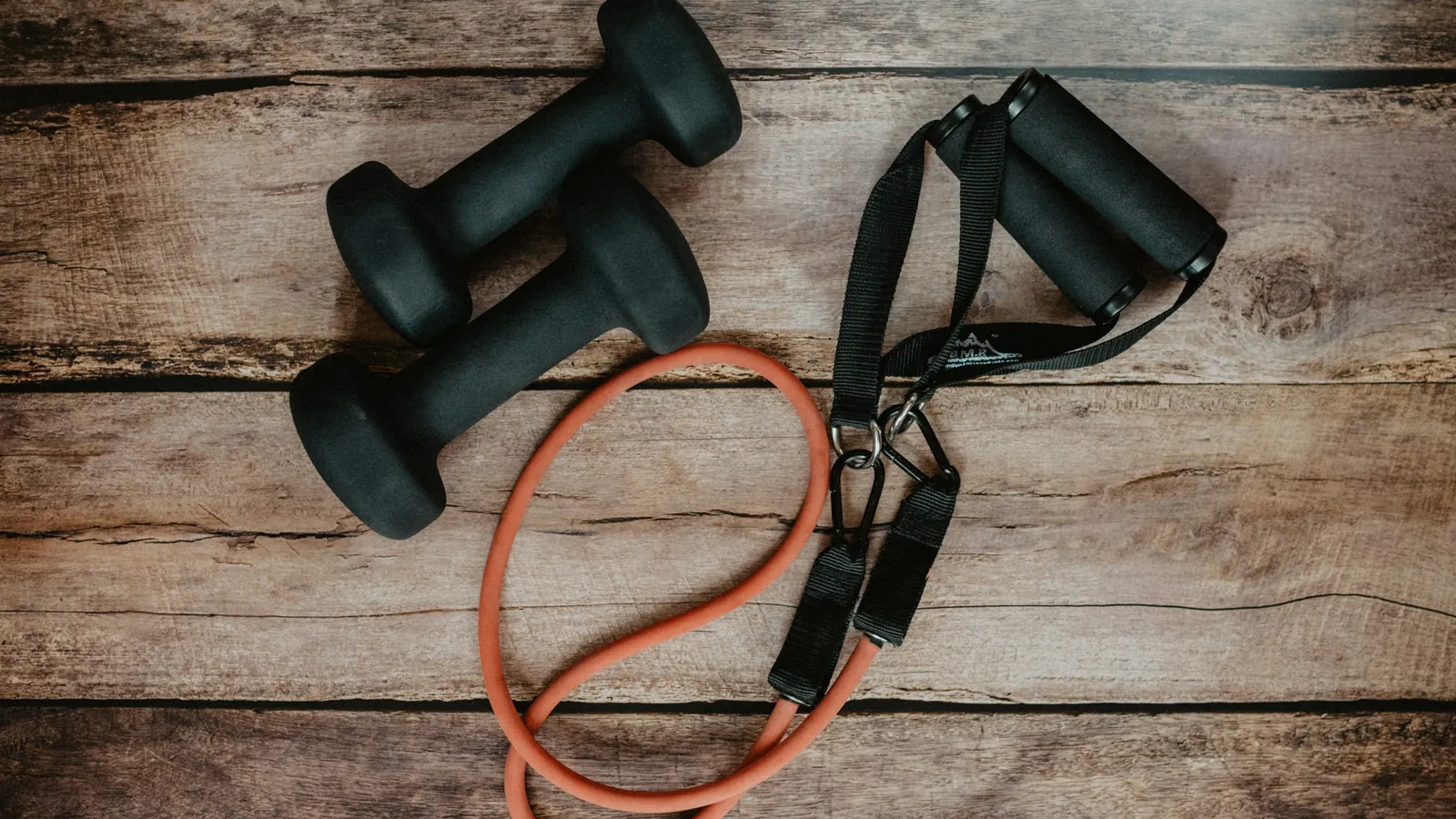
Is stretching or strengthening better for neck and back pain? For neck pain from desk work, strengthening has the stronger evidence: programmes that build strength in the neck, shoulders and upper back, or combine strengthening with stretching, have done better than stretching on its own. For the lower back the picture is more mixed, and the type of exercise seems to matter less than doing some at all. For most people who sit all day, the honest answer is both, and strength is the part a stretching routine leaves out.
Neck pain: strengthening has the edge
The broadest summary is the Cochrane review of exercise for neck pain, which pooled 27 trials with 2,485 people analysed. For neck pain that had lasted a long time, it found:
- moderate-quality evidence that strength training for the neck, the shoulder blade area and the arms improved pain;
- a beneficial effect, from small to large, for programmes that combined strengthening and stretching for the neck, shoulders and shoulder blades;
- low-quality evidence that stretching on its own may not change pain or function in the short term.
The authors found no high-quality evidence for any type of exercise, so some uncertainty remains. But their conclusion was direct: strengthening and endurance exercises for the neck, shoulders and upper back may help, while stretching alone may not be expected to (Gross et al., 2015).
A year-long trial in office workers
One of the clearest comparisons ran for a full year. 180 women office workers aged 25 to 53 with long-term neck pain were split into three groups. One did high-intensity strength training for the neck with an elastic band, one did lighter endurance training, and both also exercised the shoulders and arms. The third group was the comparison. Everyone, including that group, was advised to do aerobic exercise and stretching three times a week.
After twelve months, pain and disability had fallen more in both training groups than in the comparison group. Neck strength in the strength group rose by as much as 110%. And it was not only strength: only the strength group improved its range of movement in bending the neck forward, backward and to the side, compared with the group that had been advised to stretch. The authors concluded that stretching and aerobic exercise alone were a much less effective form of training than strength training (Ylinen et al., 2003).
Targeted works better than general
A smaller trial asked whether any exercise would do. 48 women in repetitive jobs such as computer work, all with chronic pain in the upper trapezius, were assigned to ten weeks of strength training for that muscle, to cycling with relaxed shoulders, or to no exercise. Worst pain fell by about 79% with the targeted strength training. Cycling brought only a small, short-lived drop (Andersen et al., 2008).
Reviews limited to office workers point the same way, with caveats. One found eight trials, mostly of strengthening, and a clinically meaningful drop in pain compared with no exercise; it found too few stretching trials to judge (Louw et al., 2017). A later review of eight trials rated the evidence for strengthening as low certainty, because every included trial had a high risk of bias (Jones et al., 2024).
Where stretching fits for the neck
Stretching is not useless. In a trial of 96 office workers, four weeks of neck and shoulder stretching reduced pain by 1.4 points more on a 10-point scale than an ergonomics brochure alone (Tunwattanapong et al., 2016). So stretching beats doing nothing extra. What it has not done is match strengthening, and the programmes with the best support use both. We go through the stretching trials in more detail in Do stretches help neck pain?
Lower back pain: a more mixed picture
For long-term non-specific low back pain, the basic message is that exercise helps. A Cochrane review of 249 trials found moderate-certainty evidence that exercise reduced pain by about 15 points on a 0 to 100 scale compared with no treatment, usual care or placebo (Hayden et al., 2021).
Which kind of exercise is less clear, and stretching is where the analyses disagree.
- A network analysis of 217 trials with 20,969 people found that Pilates, McKenzie therapy and functional restoration were more effective than other types of exercise. Flexibility exercises showed a clinically important effect on day-to-day function, though not on pain. The authors’ advice was to encourage people to do the exercise they enjoy, so that they keep doing it (Hayden et al., 2021, network analysis).
- Another network analysis of 89 studies ranked Pilates highest for pain, and resistance training and stabilisation or motor control exercise highest for function. Stretching did not differ from no treatment for either pain or function. The authors rated the evidence as low quality (Owen et al., 2020).
- In a trial of 228 adults with chronic low back pain, twelve weekly yoga classes improved function and symptoms more than a self-care book, but yoga was no better than conventional stretching classes at any point (Sherman et al., 2011).
So for the lower back, stretching may help some people, and a stretching class can hold its own against yoga. But Pilates, which builds strength and control, was among the most effective types for pain in both network analyses, and resistance training ranked well for function in one. If those interest you, see Does Pilates help back pain? and Is yoga good for back pain?
How much strengthening does it take?
Less than you might fear.
- In a trial of 198 adults working at least 30 hours a week with frequent neck and shoulder pain, training with an elastic band for 2 minutes a day, five days a week, for ten weeks reduced pain by 1.4 points on a 10-point scale compared with a group given general health information. Twelve minutes a day reduced it by 1.9 (Andersen et al., 2011). There is more on that trial in Is two minutes of exercise enough?
- In a trial of 447 office workers, one hour a week of neck and shoulder strength training reduced neck pain whether it was done as one long session, three medium ones or nine short ones (Andersen et al., 2012).
- The NHS recommends strengthening activities that work all the major muscle groups, including the back, shoulders and arms, on at least two days a week. Its examples range from lifting weights to yoga, Pilates and carrying heavy shopping (NHS).
What this means if you sit at a desk all day
You do not have to choose. A workable split for most desk workers looks like this:
- Stretching and mobility for the working day. Short, regular sessions break up long sits and keep the neck, shoulders and upper back, the thoracic spine, moving. Pages such as neck stretches and upper back stretches explain individual exercises, and How often should you stretch? covers how often.
- Strengthening at least twice a week. For the neck and shoulders, that is where the trial evidence is strongest. For the lower back, exercises that ask your muscles to hold and control your trunk, such as the bird dog and the glute bridge, are one place to start.
If your pain has lasted months or keeps returning, a physiotherapist can examine you and pick the right exercises and load for what they find. If cost is a worry, see how much physiotherapy costs. There is more on each area in neck pain from desk work and lower back pain from sitting.
Where Bavelu fits
It is fair to say this plainly, since the evidence above favours strength. Bavelu is built around stretching and mobility. Its sessions include a few bodyweight exercises that ask muscles to work, such as the bird dog and the glute bridge, but there are no weights or bands, so it is not the progressive strength training used in the neck trials. Think of it as the regular movement between your strength work, not a replacement for it.
When to see a doctor
Neither stretching nor strengthening is the right first step for every symptom. The NHS advises seeing a GP if neck pain or stiffness has not gone after a few weeks, painkillers have not helped, you are worried, or you have other symptoms such as pins and needles or a cold arm (NHS). For the back, see a GP if the pain has not improved after a few weeks or is worse at night. Call 999 or go to A&E if back pain comes with numbness or weakness in both legs, loss of feeling around your genitals or anus, changes in bladder or bowel control, or chest pain (NHS).
So, is stretching or strengthening better?
- Neck: strengthening, or strengthening combined with stretching, has better evidence than stretching alone.
- Lower back: most exercise helps; strength and control approaches rank well, and the evidence on stretching is split.
- Desk workers: keep the stretching for the working day, and add some strength work at least twice a week.
Questions people ask
Is stretching or strengthening better for neck pain?
Strengthening has the stronger evidence. The Cochrane review of 27 trials found moderate-quality evidence for strength training of the neck, shoulders and upper back, and benefits for programmes combining strengthening and stretching. Low-quality evidence suggested stretching alone may not change pain in the short term, although single trials in office workers have found it helped compared with ergonomics advice alone.
Is stretching or strengthening better for lower back pain?
The evidence is more mixed. Exercise in general reduces pain in long-term low back pain, and approaches such as Pilates, resistance training and motor control exercise rank well in large analyses. One analysis found stretching no better than no treatment, another found flexibility exercise helped function, and in one trial yoga was no better than stretching classes.
Do I need weights to strengthen my neck and back?
Not necessarily. In one trial, office workers used an elastic band for two minutes a day, five days a week, and their neck and shoulder pain fell more than in a group given health information. The NHS lists carrying heavy shopping, yoga and Pilates among strengthening activities, alongside lifting weights.
Is stretching a waste of time?
No. In trials, office workers who stretched regularly had less neck pain than those who only received ergonomics advice, and stretching improves range of motion. The research simply suggests that stretching alone is a thinner plan than stretching combined with strengthening.
How often should I do strength training for neck or back pain?
The NHS recommends strengthening activities that work all the major muscle groups on at least two days a week. In a trial of 447 office workers, one hour a week of neck and shoulder strength training reduced neck pain whether it was done in one session, three or nine.
Terms on this page
- Thoracic spineThe twelve vertebrae of the upper and middle back, T1 to T12, where the ribs attach.
- TrapeziusThe large muscle over the back of the neck and shoulders, and the most common seat of desk-work neck tension.
- Non-specific low back painLow back pain without an identifiable specific cause, which covers about nine in ten cases.
Sources
- Gross A et al. Exercises for mechanical neck disorders. Cochrane Database of Systematic Reviews, 2015.
- Ylinen J et al. Active neck muscle training in the treatment of chronic neck pain in women: a randomized controlled trial. JAMA, 2003.
- Andersen LL et al. Effect of two contrasting types of physical exercise on chronic neck muscle pain. Arthritis and Rheumatism, 2008.
- Louw S et al. Effectiveness of exercise in office workers with neck pain: a systematic review and meta-analysis. South African Journal of Physiotherapy, 2017.
- Jones LB, Jadhakhan F, Falla D. The influence of exercise on pain, disability and quality of life in office workers with chronic neck pain: a systematic review and meta-analysis. Applied Ergonomics, 2024.
- Tunwattanapong P, Kongkasuwan R, Kuptniratsaikul V. The effectiveness of a neck and shoulder stretching exercise program among office workers with neck pain: a randomized controlled trial. Clinical Rehabilitation, 2016.
- Hayden JA et al. Exercise therapy for chronic low back pain. Cochrane Database of Systematic Reviews, 2021.
- Hayden JA et al. Some types of exercise are more effective than others in people with chronic low back pain: a network meta-analysis. Journal of Physiotherapy, 2021.
- Owen PJ et al. Which specific modes of exercise training are most effective for treating low back pain? Network meta-analysis. British Journal of Sports Medicine, 2020.
- Sherman KJ et al. A randomized trial comparing yoga, stretching, and a self-care book for chronic low back pain. Archives of Internal Medicine, 2011.
- Andersen LL et al. Effectiveness of small daily amounts of progressive resistance training for frequent neck/shoulder pain: randomised controlled trial. Pain, 2011.
- Andersen CH et al. Influence of frequency and duration of strength training for effective management of neck and shoulder pain: a randomised controlled trial. British Journal of Sports Medicine, 2012.
- NHS. Physical activity guidelines for adults aged 19 to 64. Last reviewed 22 May 2024.
- NHS. Neck pain and stiff neck. Last reviewed 27 April 2023.
- NHS. Back pain. Last reviewed 5 March 2026.
This page explains a topic in general terms. It is not a diagnosis and does not replace a doctor or physiotherapist. If something hurts badly, keeps getting worse or comes with numbness, weakness or fever, see a doctor.