Blog
Does Pilates help back pain?
Pilates is one of the most studied types of exercise for long-term lower back pain. In trials it does about as well as other good exercise, and the posture claims rest on thinner evidence.
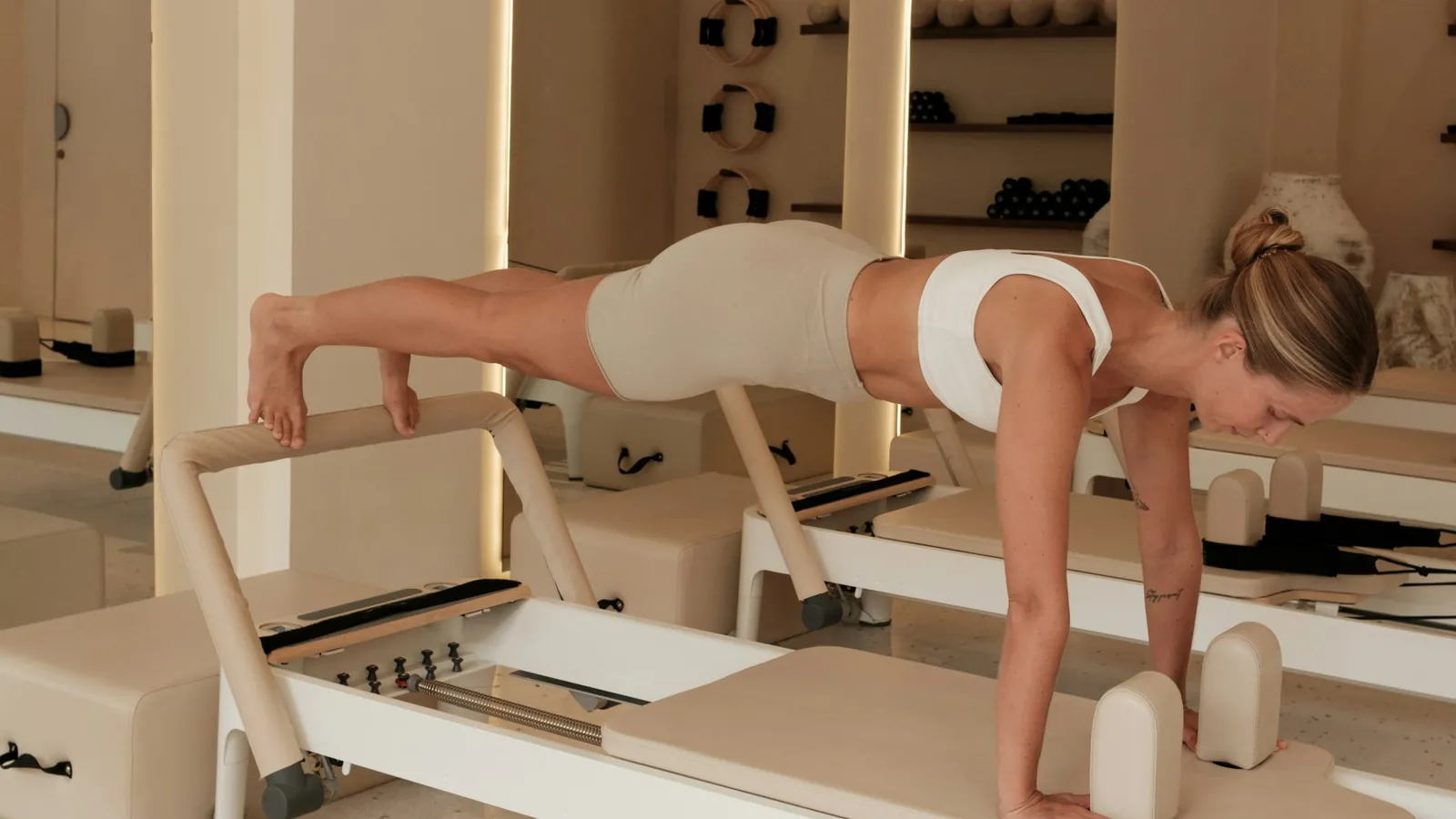
Does Pilates help back pain? For long-term lower back pain, the research says it probably does, and by roughly as much as other well-designed exercise. A Cochrane review found low to moderate quality evidence that Pilates reduced pain and disability compared with doing very little, but no conclusive evidence that it beats other exercise. The popular claim that Pilates fixes posture rests on much thinner evidence.
Most of the trials below are about non-specific low back pain, the everyday kind with no single identifiable cause, and most were in people whose pain had lasted three months or more. That is worth keeping in mind if your back aches after a long week at a desk rather than after an injury.
Does Pilates help back pain? What the Cochrane review found
The Cochrane review screened 126 trials and included 10, with 510 participants in total (Yamato et al., 2015).
- Against a minimal intervention, meaning a comparison group that received little treatment, six trials showed Pilates reduced pain by about 14 points on a 0 to 100 scale in the first three months. The evidence was low quality. Two trials gave moderate quality evidence of a reduction of about 10 points at three to twelve months. Disability improved by a small to medium amount.
- Against other exercise, the picture was mixed. For disability, there was moderate quality evidence of no significant difference between Pilates and other exercise. For pain, the trials disagreed with each other.
The authors’ conclusion was careful: there is some evidence that Pilates helps, no high quality evidence for any comparison, and no conclusive evidence that it is better than other exercise. They suggested the choice can rest on what the person prefers and on cost. The review’s searches ran to 2014, so it does not include more recent trials.
What a 14-point drop means
For scale, the Cochrane review of all exercise therapy for long-term low back pain treated a 15-point difference on the same kind of 0 to 100 scale as clinically important. Across 249 trials, it found moderate-certainty evidence that exercise reduced pain by about 15 points compared with no treatment, usual care or placebo (Hayden et al., 2021). So Pilates sits roughly where exercise in general sits: a modest, real effect, not a cure. Most of the trials in that review were at risk of bias, partly because you cannot hide from people whether they are exercising.
Is Pilates better than other exercise for back pain?
This is where the headlines come from. Three large reviews used a method called network meta-analysis, which ranks many types of exercise against each other, often through indirect comparisons:
- A review of 89 studies with 5,578 patients ranked Pilates as the most likely to be best for pain. Resistance training and stabilisation exercise came out on top for physical function. The authors rated the evidence as low quality and noted that few studies had a low risk of bias (Owen et al., 2020).
- A review of 217 trials with 20,969 participants found Pilates, McKenzie therapy and functional restoration more effective than other types of exercise. Yet its authors still concluded that people with chronic pain in the lower back should be encouraged to do the exercise they enjoy, to help them keep it up (Hayden et al., 2021).
- A review of 118 trials with 9,710 participants found that almost every type of exercise helped compared with control, except stretching for pain and the McKenzie method for disability. Pilates had the highest ranking for both pain and disability (Fernández-Rodríguez et al., 2022).
Why head-to-head trials tell a quieter story
When Pilates is tested directly against other exercise, the gap tends to shrink. In an Australian trial, 87 people with long-term low back pain were randomised to physiotherapist-led clinical Pilates, tailored to each person after an examination, or to a general exercise programme. Both groups had supervised 60-minute sessions twice a week for six weeks plus home exercise. Both improved, and there was no difference between them at 6, 12 or 24 weeks (Wajswelner et al., 2012).
The same pattern shows up for motor control exercise, the approach built around training the deep trunk muscles. A Cochrane review of 29 trials with 2,431 people found it helped compared with minimal intervention but was not clinically better than other exercise, and its authors said the choice should probably depend on preference, the therapist’s training, cost and safety (Saragiotto et al., 2016).
Rankings are useful for spotting what tends to do well. They are less good at telling you that one type of exercise will suit you better than another. If you are weighing Pilates against other options, our posts on yoga for back pain and on stretching or strengthening look at the same question from different angles.
Mat or reformer?
One trial in Brazil compared mat Pilates with equipment-based Pilates in 86 people with long-term low back pain, each attending 12 sessions over six weeks. At six months, the equipment group did better on disability and on kinesiophobia, the fear that moving will cause pain or harm. Pain and overall sense of improvement did not differ (da Luz et al., 2014). It was a single trial from one private clinic, so it is a reason to be curious about equipment classes, not a reason to dismiss mat work.
Does Pilates improve posture?
Posture is a big part of how Pilates is marketed, so it is fair to ask what the studies show.
The most careful answer comes from a 2024 review of 18 studies. In children and adolescents, there was moderate-certainty evidence that Pilates improved the angles of the upper and lower back compared with inactive groups. In adults, the evidence for changes in shoulder position, head position, lower back curve and scoliosis was rated very low to low certainty, and the authors called for more studies (Roque et al., 2024). Another 2024 review of 13 studies reached more enthusiastic conclusions, but it included non-randomised designs and fewer than half of its studies were rated high quality (Li et al., 2024).
Studies of office workers show why caution is sensible. In one, 22 desk workers did reformer Pilates twice a week for eight weeks and their posture ratings improved, but there was no comparison group, so the change could not be separated from simply being measured twice (Taştan et al., 2025).
There is also a bigger question underneath. A review of 41 earlier reviews found no consensus that any particular spinal posture causes low back pain (Swain et al., 2020). So even if Pilates changes the shape of your upper back, that is not the same as changing your pain. If a rounder upper back or thoracic kyphosis is what worries you, see rounded upper back and our look at whether posture correctors work.
What about the neck and shoulders?
People who sit all day often have neck pain as well. A 2025 review of 8 trials with 439 people with long-term neck pain found that Pilates reduced pain compared with control groups, although the evidence straight after treatment was very low certainty and only two studies reported later follow-up. Against other forms of exercise, other exercise did slightly better for pain straight after treatment, and disability did not differ (Lazoura et al., 2025). For the neck, Pilates looks like one reasonable option among several rather than a standout.
What this means if you sit all day
Guidelines do not single out Pilates. NICE suggests considering a group exercise programme, whether biomechanical, aerobic, mind-body or a mix, for a specific episode or flare-up of low back pain, and says to take people’s needs, preferences and abilities into account when choosing the type (NICE NG59). The NHS lists walking, swimming, yoga and pilates as activities that may help ease back pain (NHS).
A few practical points follow from the studies:
- Pick what you will keep doing. The trials that found benefits ran for weeks, with regular sessions. In the 118-trial review, the programmes that did best included at least one or two sessions a week of Pilates or strength work, sessions under an hour, and programmes lasting three to nine weeks for Pilates and core-based exercise.
- A class does not cancel the sitting. One or two sessions a week still leave long, unbroken hours in a chair. Our page on lower back pain from sitting covers what else tends to help across the working day.
- Clinical Pilates is a different service. The Australian trial used physiotherapists who examined each person and tailored the programme. If you want that kind of individual assessment, see how much physiotherapy costs.
- You can try similar movements elsewhere. Several exercises from the Bavelu app are written out on this site, including the bird dog and the glute bridge, which train the trunk and hips without equipment.
If back pain has made you wary of moving, our post on whether back pain goes away on its own looks at how it usually behaves over time.
When to see a doctor
Back pain is only very rarely a sign of something serious, but Pilates or any other exercise is not a substitute for a check-up when something feels wrong. The NHS advises seeing a GP if your back pain does not improve after a few weeks of looking after it at home, stops you doing everyday things, comes with weight loss you cannot explain, comes with a lump, swelling or a change in the shape of your back, does not ease with rest or is worse at night, is worse when you sneeze, cough or poo, or is coming from the top of your back rather than the lower back (NHS).
Ask for an urgent GP appointment or contact 111 if you feel hot, cold, shivery or generally unwell, or the pain is severe and started suddenly, or is getting worse quickly. Call 999 or go to A&E if back pain comes with pain, tingling, weakness or numbness in both legs, loss of feeling around the genitals or anus, changes in bladder or bowel control, changes in sexual function, chest pain, or if it started after a serious accident. These warning signs are sometimes called red flags.
The NHS also advises stopping back exercises if your pain gets worse, and seeing a GP for advice.
So, does Pilates help back pain?
- For long-term lower back pain, Pilates helps about as much as other good exercise: a modest effect, with low to moderate quality evidence behind it.
- Rankings often put it first, but head-to-head trials have not shown a clear advantage over general exercise.
- The posture claims are weaker, and better posture does not automatically mean less pain.
- The type of exercise matters less than doing it regularly, so choose the one you will stick with.
Bavelu is not a Pilates class. Its sessions for the neck, shoulders and back are stretching and mobility work designed and filmed by physiotherapists, done at a desk, on a chair or on a mat, and they fit around a Pilates class or any other exercise you already enjoy.
Questions people ask
Does Pilates help lower back pain?
For long-term lower back pain, probably yes. A Cochrane review of 10 trials with 510 people found low to moderate quality evidence that Pilates reduced pain and disability compared with a minimal intervention. It found no conclusive evidence that Pilates is better than other forms of exercise.
Is Pilates better than other exercise for back pain?
Reviews that rank exercise types often put Pilates at or near the top for pain, but those rankings rest largely on indirect comparisons and low-quality evidence. When an 87-person trial compared physiotherapist-led Pilates directly with a general exercise programme, both groups improved and there was no clear difference. The review authors advise choosing exercise you enjoy and will keep doing.
Does Pilates improve posture?
The evidence is thin. A 2024 review of 18 studies found moderate-certainty evidence for small changes in spinal angles in children and adolescents, but only very low to low certainty evidence in adults. Even where posture changes, a review of 41 earlier reviews found no consensus that posture causes back pain.
Is reformer Pilates better than mat Pilates for back pain?
One trial of 86 people with long-term lower back pain compared the two, with 12 sessions over six weeks. At six months the equipment group scored better on disability and fear of movement, but not on pain. It was a single trial from one clinic, so it is not a reason to avoid mat classes.
Can Pilates make back pain worse?
Serious problems were not reported in the trials. In the Cochrane review on Pilates, two trials looked for side effects: one found none and the other reported minor ones. The NHS advises stopping back exercises if the pain gets worse and seeing a GP.
Terms on this page
- Non-specific low back painLow back pain without an identifiable specific cause, which covers about nine in ten cases.
- Chronic painPain that persists or keeps coming back for more than three months.
- KinesiophobiaFear of moving because you expect it to cause pain or injury, and why it matters for back pain.
- Thoracic kyphosisThe natural outward curve of the upper back, and when it becomes hyperkyphosis.
- Red flagsWarning signs that back or neck pain could have a serious cause and needs a doctor promptly.
- ScoliosisA sideways curve and twist of the spine, most often starting between the ages of 10 and 15.
Sources
- Yamato TP, Maher CG, Saragiotto BT, Hancock MJ, Ostelo RW, Cabral CM, Menezes Costa LC, Costa LO. Pilates for low back pain. Cochrane Database of Systematic Reviews, 2015.
- Hayden JA, Ellis J, Ogilvie R, Malmivaara A, van Tulder MW. Exercise therapy for chronic low back pain. Cochrane Database of Systematic Reviews, 2021.
- Owen PJ et al. Which specific modes of exercise training are most effective for treating low back pain? Network meta-analysis. British Journal of Sports Medicine, 2020.
- Hayden JA et al. Some types of exercise are more effective than others in people with chronic low back pain: a network meta-analysis. Journal of Physiotherapy, 2021.
- Fernández-Rodríguez R et al. Best exercise options for reducing pain and disability in adults with chronic low back pain: Pilates, strength, core-based, and mind-body. A network meta-analysis. Journal of Orthopaedic & Sports Physical Therapy, 2022.
- Wajswelner H, Metcalf B, Bennell K. Clinical Pilates versus general exercise for chronic low back pain: randomized trial. Medicine & Science in Sports & Exercise, 2012.
- Saragiotto BT et al. Motor control exercise for chronic non-specific low-back pain. Cochrane Database of Systematic Reviews, 2016.
- da Luz MA et al. Effectiveness of mat Pilates or equipment-based Pilates exercises in patients with chronic nonspecific low back pain: a randomized controlled trial. Physical Therapy, 2014.
- Roque GC, de Oliveira RG, Sorzi MV, de Oliveira LC. Are Pilates exercises effective in improving postural misalignment? Systematic review and meta-analysis. Musculoskeletal Care, 2024.
- Li F, Omar Dev RD, Soh KG, Wang C, Yuan Y. Effects of Pilates on body posture: a systematic review. Archives of Rehabilitation Research and Clinical Translation, 2024.
- Taştan Z et al. The effects of reformer Pilates on postural alignment, body appreciation and social appearance anxiety in office workers. BMC Sports Science, Medicine and Rehabilitation, 2025.
- Swain CTV, Pan F, Owen PJ, Schmidt H, Belavy DL. No consensus on causality of spine postures or physical exposure and low back pain: a systematic review of systematic reviews. Journal of Biomechanics, 2020.
- Lazoura E et al. Effectiveness of the Pilates method in patients with chronic neck pain: a systematic review with meta-analysis. BMC Musculoskeletal Disorders, 2025.
- NICE. Low back pain and sciatica in over 16s: assessment and management (NG59). Recommendations.
- NHS. Back pain. Last reviewed 5 March 2026.
This page explains a topic in general terms. It is not a diagnosis and does not replace a doctor or physiotherapist. If something hurts badly, keeps getting worse or comes with numbness, weakness or fever, see a doctor.
