Blog
Is yoga good for back pain?
Yoga helps long-term lower back pain about as much as other back exercise, and a little more than doing nothing. The average effects are modest, and there are a few safety points worth knowing.
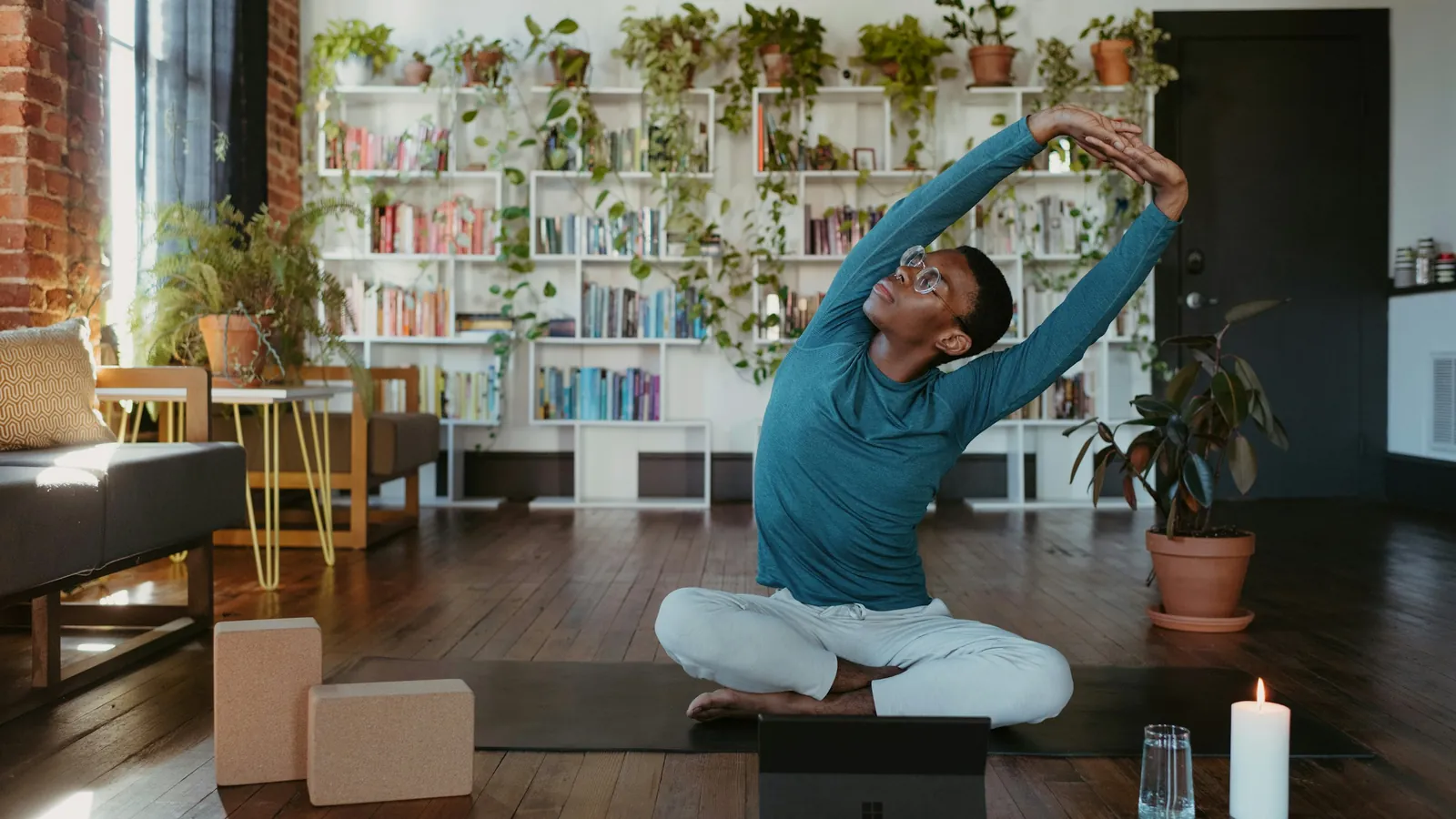
Is yoga good for back pain? For long-term lower back pain, it can help, roughly as much as other back exercise. A Cochrane review of 21 trials found that yoga improved pain and day-to-day function a little compared with no exercise, and did about as well as exercise programmes aimed at the back. The average improvements were small, and yoga led to more flare-ups of back pain than doing nothing. Here is the detail, and what it means if you spend your days sitting.
Is yoga good for back pain? The short answer
- Compared with no exercise: a small improvement on average, with more people reporting their back as better.
- Compared with other back exercise: about the same for function; for pain, the evidence is uncertain.
- Safety: about as safe as other exercise, though some people’s back pain flares.
- Which to choose: the Cochrane authors say it may come down to availability, cost and preference.
What the Cochrane review found
The most complete summary is the 2022 Cochrane review of 21 trials with 2,223 people with long-term non-specific low back pain, meaning pain with no single identifiable cause. The trials came from the USA, India, the UK, Croatia, Germany, Sweden and Turkey. Most participants were women in their 40s or 50s, and most trials used Iyengar, hatha or viniyoga (Wieland et al., 2022).
Yoga compared with no exercise, at three months:
- Function improved by 1.69 points on a 24-point disability questionnaire (low-certainty evidence).
- Pain fell by 4.5 points on a 100-point scale (moderate certainty).
- In four trials, people who did yoga were more than twice as likely to say their back pain had improved or gone (low certainty).
- Quality of life probably improved a little. Depression scores barely changed.
Yoga compared with back-focused exercise, such as physiotherapy, in eight trials with 912 people: there was probably little or no difference in function at three months. Whether there is any difference in pain remains uncertain.
What “clinically unimportant” means
The review calls the improvements against no exercise “small and clinically unimportant”. That has a specific meaning. Researchers set a threshold for the smallest change a person would notice: 5 points on that disability questionnaire, and 15 points for pain. The average improvements with yoga fell short of both.
Averages can hide a spread, though: an average below the threshold can still include people who improved a lot. That may be why more of the yoga group rated their back as better. And all the trials shared a weakness: people knew they were doing yoga and rated their own pain, which the review counts as a high risk of bias. The authors noted that blinded comparisons would be unlikely to find a clinically important benefit.
The trials behind it
Three larger trials show what this looks like in practice.
- Yoga, stretching or a book. In the USA, 228 adults with long-term back pain were given 12 weekly yoga classes, 12 weekly stretching classes, or a self-care book. At 12 weeks, the yoga group had better function and fewer symptoms than the book group, and function was still better at 26 weeks. Yoga was not better than the stretching classes at any point (Sherman et al., 2011).
- Yoga in the UK. 313 adults with long-term or recurring back pain received an education booklet, and half were also offered 12 gradually progressing classes over three months. The yoga group had better back function at 3, 6 and 12 months, but similar pain scores to usual care. 60% of those offered yoga went to at least six of the twelve classes. Twelve people in the yoga group reported side effects, mostly increased pain, against two in the usual care group (Tilbrook et al., 2011).
- Yoga or physiotherapy. 320 adults, mostly on low incomes, were given 12 weekly yoga classes, 15 physiotherapy visits, or an educational book. Yoga was no less effective than physiotherapy for function and pain, and both groups were around 21 to 22 percentage points less likely to be using pain medication at 12 weeks than the education group. Yoga was not, however, better than education for function or pain. Improvements lasted a year (Saper et al., 2017).
Across the three, yoga usually did better than a book or usual care for function, though not in every trial, and about as well as other active treatment.
How yoga compares with other exercise
For long-term lower back pain, exercise in general has moderate-certainty evidence of reducing pain compared with no treatment or usual care (Hayden et al., 2021). When the same team compared exercise types in 217 trials, Pilates, McKenzie therapy and functional restoration came out ahead on average. Their practical conclusion was still to encourage people to do the exercise they enjoy, because that is what they keep doing (Hayden et al., 2021).
Guidelines leave room for yoga. NICE recommends considering a group exercise programme, including mind–body approaches, chosen around a person’s needs and preferences (NICE NG59). The American College of Physicians lists yoga among the first options for long-term back pain, rated as low-quality evidence (Qaseem et al., 2017). The NHS says activities such as walking, swimming, yoga and Pilates may help ease back pain (NHS).
If you are weighing up the options, see Does Pilates help back pain? and Is walking good for back pain?.
The calm part may count too
Yoga combines movement with breathing and relaxation, and that side has been tested indirectly. In a trial of 342 adults with long-term back pain, an eight-week mindfulness course that included meditation and yoga led to more people improving in function and pain at six months than usual care (Cherkin et al., 2016). If stress is part of your back pain, Can stress cause back pain? looks at the evidence.
Is yoga safe for your back?
For most people, about as safe as other exercise. A review of 94 trials with 8,430 participants found no difference in side effects or serious side effects between yoga and usual care or other exercise. Yoga had more minor side effects than psychological or education programmes (Cramer et al., 2015).
For back pain specifically, the Cochrane review found more side effects with yoga than with no exercise, mostly increased back pain: about 43 per 1,000 people against 9. Compared with other exercise, the rate was similar (84 against 91 per 1,000).
Injuries do happen outside trials. US emergency departments saw 29,590 yoga-related injuries between 2001 and 2014, according to national injury surveillance data. The trunk was the most commonly injured area (46.6%), and sprains and strains made up 45.0% of diagnoses. The injury rate was highest in people aged 65 and over (Swain & McGwin, 2016).
Some practical points follow from the research:
- Pick a class that resembles the trials. They used structured programmes for people with back pain, several of them built up gradually. A gentle or beginners’ class is closer to that than a fast, advanced one.
- Take care with deep forward bends if you have osteoporosis. A UK consensus statement recommends avoiding postures with a high degree of spinal flexion, during exercise or daily life (Brooke-Wavell et al., 2022).
- Stop if it hurts. The NHS advises stopping back exercises if your pain gets worse, and seeing a GP for advice.
- Get pain down the leg checked first. If you have pain, tingling or numbness running down a leg, such as sciatica, ask a GP or physiotherapist which poses suit you.
Yoga for people who sit all day
The larger trials used one class a week. The rest of the week, the participants went on with their lives, which for many people means long hours in a chair. A weekly class and regular movement through the working day are not competing options. Our guide to microbreaks looks at how often to get up.
Several exercises in the Bavelu app borrow from yoga, and each has its own page showing one exercise: the cat-cow stretch, child’s pose, the cobra stretch and pigeon pose.
When to see a doctor
See a GP if your back pain has not improved after a few weeks, stops you doing day-to-day activities, is worse at night, or you are worried. Ask for an urgent appointment or contact 111 if you feel hot, cold, shivery or generally unwell, or the pain is severe and starts suddenly or gets worse quickly.
Call 999 or go to A&E if back pain comes with pain, tingling, weakness or numbness in both legs, loss of feeling around your genitals or anus, changes in bladder or bowel control or in sexual sensation or function, chest pain, or follows a serious accident (NHS). These red flags need a doctor before any class. There is more on back pain at a desk in lower back pain from sitting. If your pain has gone on for months, a physiotherapist can help you choose what to try; see how much physiotherapy costs.
What to take from it
- Yoga is a reasonable option for long-term lower back pain, with small average benefits over no exercise.
- It does about as well as other back exercise, including physiotherapy in one trial.
- Flare-ups happen more than with no exercise, about as often as with other exercise.
- Choose what you will keep doing. That matters more than the exact type.
Questions people ask
Is yoga good for lower back pain?
For long-term lower back pain it can help a little. A Cochrane review of 21 trials with 2,223 people found small improvements in pain and function compared with no exercise, smaller on average than the change most people would notice, and about the same results as other back exercise. People who did yoga were more than twice as likely to rate their back pain as improved or gone.
Is yoga better than physiotherapy for back pain?
Not better, but not worse either, in the trials so far. In a trial of 320 adults, 12 weekly yoga classes were no less effective than 15 physiotherapy visits for function and pain, and the Cochrane review found little or no difference in function between yoga and back-focused exercise.
Can yoga make back pain worse?
Sometimes. In the Cochrane review, side effects, mostly increased back pain, were more common with yoga than with no exercise (about 43 against 9 per 1,000 people), but about as common as with other exercise. In a trial comparing yoga with physiotherapy, side effects were mostly mild joint and back pain that settled on its own. Stop if a pose makes your pain worse, and get advice if it does not settle.
What type of yoga is best for back pain?
The trials mostly used Iyengar, hatha or viniyoga, in structured classes for people with back pain, several of them built up gradually. The Cochrane review did not compare styles, so there is no evidence that one is better than another. A gentle or beginners' class is closer to what was tested than a fast or advanced one.
How often do you need to do yoga for back pain?
There is no agreed amount. The three larger trials used one class a week for 12 weeks, and in each the benefit to function was still there months later. In one trial, people who carried on with drop-in classes did no better than those who practised at home.
Terms on this page
- YogaA mind-body practice of postures, breathing and relaxation, and what the research says about it for back and neck pain.
- Non-specific low back painLow back pain without an identifiable specific cause, which covers about nine in ten cases.
- OsteoporosisA long-term condition that makes bones weak and easier to break, often without symptoms.
- SciaticaPain, tingling or numbness running from the buttock down the leg because the sciatic nerve is irritated or compressed.
- Red flagsWarning signs that back or neck pain could have a serious cause and needs a doctor promptly.
Sources
- Wieland LS, Skoetz N, Pilkington K, Harbin S, Vempati R, Berman BM. Yoga for chronic non-specific low back pain. Cochrane Database of Systematic Reviews, 2022.
- Sherman KJ et al. A randomized trial comparing yoga, stretching, and a self-care book for chronic low back pain. Archives of Internal Medicine, 2011.
- Tilbrook HE et al. Yoga for chronic low back pain: a randomized trial. Annals of Internal Medicine, 2011.
- Saper RB et al. Yoga, physical therapy, or education for chronic low back pain: a randomized noninferiority trial. Annals of Internal Medicine, 2017.
- Hayden JA, Ellis J, Ogilvie R, Malmivaara A, van Tulder MW. Exercise therapy for chronic low back pain. Cochrane Database of Systematic Reviews, 2021.
- Hayden JA et al. Some types of exercise are more effective than others in people with chronic low back pain: a network meta-analysis. Journal of Physiotherapy, 2021.
- NICE. Low back pain and sciatica in over 16s: assessment and management (NG59). Recommendations.
- Qaseem A et al. Noninvasive treatments for acute, subacute, and chronic low back pain: a clinical practice guideline from the American College of Physicians. Annals of Internal Medicine, 2017.
- NHS. Back pain. Last reviewed 5 March 2026.
- Cherkin DC et al. Effect of mindfulness-based stress reduction vs cognitive behavioral therapy or usual care on back pain and functional limitations in adults with chronic low back pain: a randomized clinical trial. JAMA, 2016.
- Cramer H, Ward L, Saper R, Fishbein D, Dobos G, Lauche R. The safety of yoga: a systematic review and meta-analysis of randomized controlled trials. American Journal of Epidemiology, 2015.
- Swain TA, McGwin G. Yoga-related injuries in the United States from 2001 to 2014. Orthopaedic Journal of Sports Medicine, 2016.
- Brooke-Wavell K et al. Strong, steady and straight: UK consensus statement on physical activity and exercise for osteoporosis. British Journal of Sports Medicine, 2022.
This page explains a topic in general terms. It is not a diagnosis and does not replace a doctor or physiotherapist. If something hurts badly, keeps getting worse or comes with numbness, weakness or fever, see a doctor.