Exercises · Lower back
Cobra stretch: a backbend for your chest and lower back
Lying on your front and pressing up through your hands, the cobra opens the chest and bends your back the opposite way to a day at a desk. It is a bigger backbend than it looks, so it is worth knowing who should go easy.
Cobra
A bigger backbend on your hands that opens the chest and lengthens the front of the body.
- 2:20
- On a mat
- Lower Back
- Chest
Move slowly. Stop if it hurts, or if you feel tingling or numbness.
-
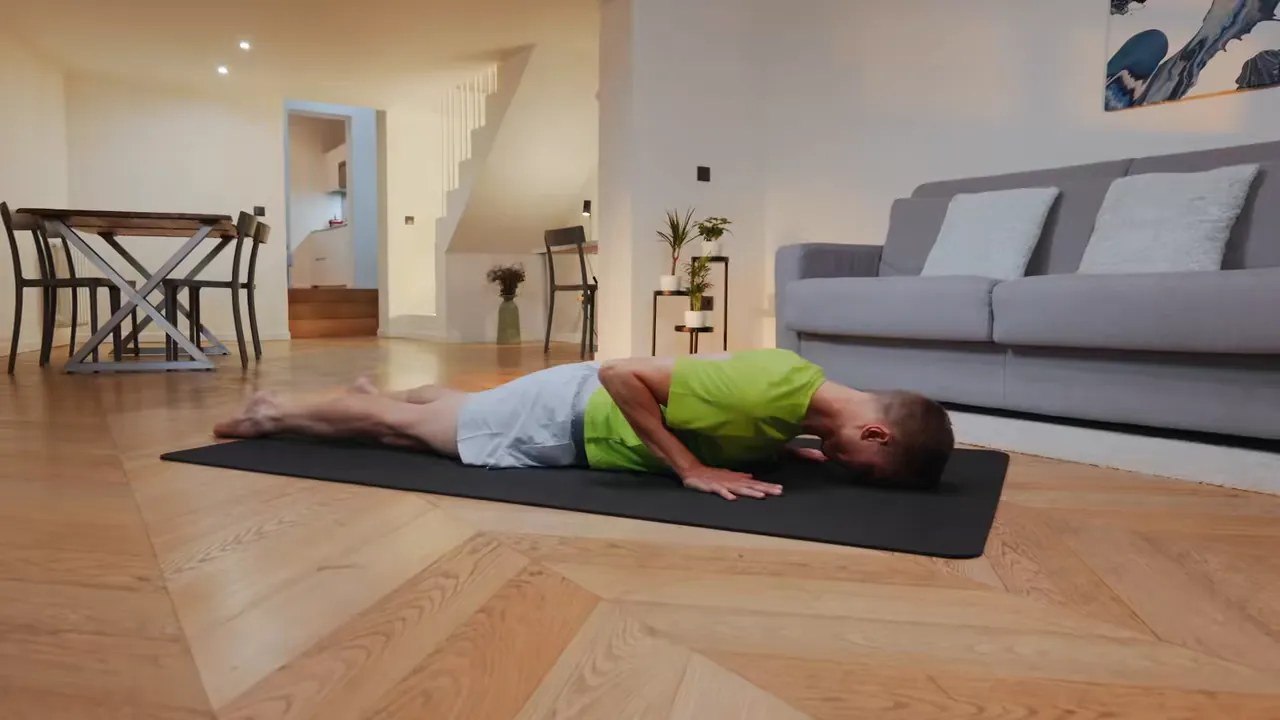
Step 1: Lie on your front with your hands under your shoulders.
Keep: Lie on your front with your hands under your shoulders.
Avoid: Hands not under the shoulders
-
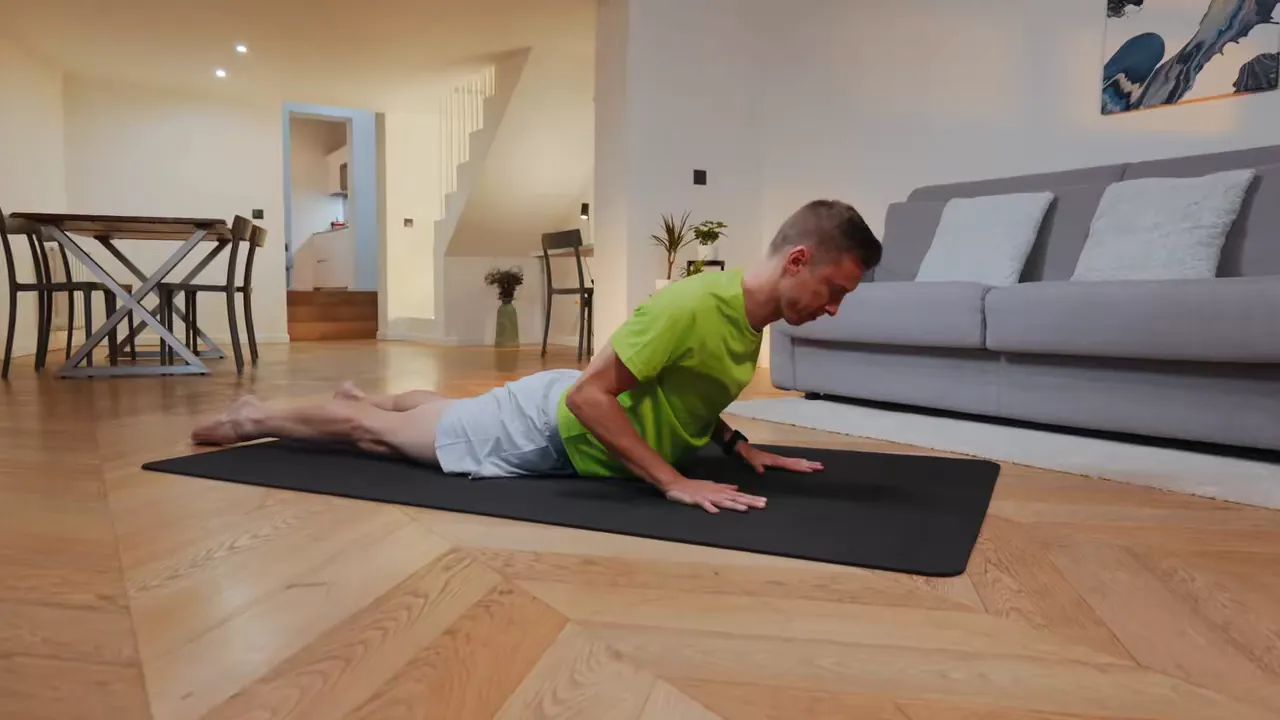
Step 2: Breathe in, press up and lift your chest.
Keep: Breathe in as you press up, and lift your chest only as far as is comfortable today.
Avoid: Chasing heightNothing in the steps asks you to go as high as you can.
-
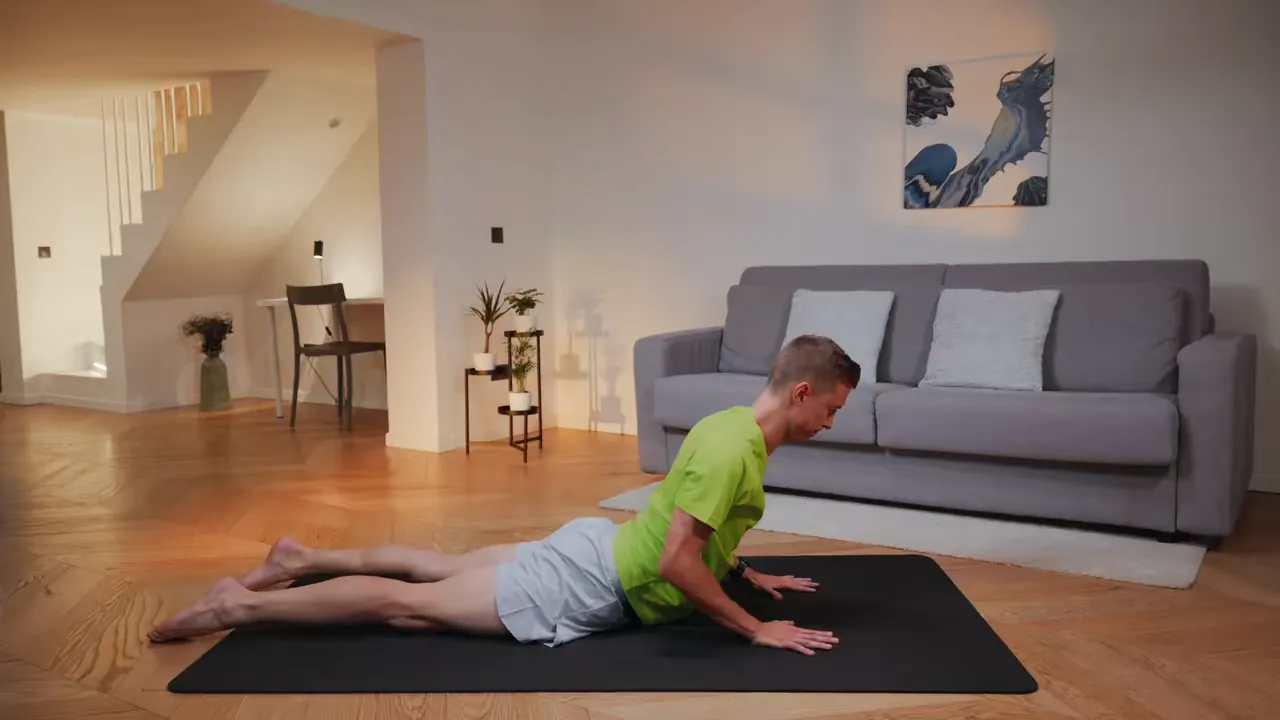
Step 3: Keep your elbows slightly bent and your pelvis on the mat.
Keep: Keep your elbows slightly bent.
Avoid: Straightening the armsLocked, straight arms push you into a deeper backbend than the exercise asks for.
Keep: Your pelvis stays on the mat.
Avoid: Lifting the pelvisOnce it comes up, you are doing a different pose.
-
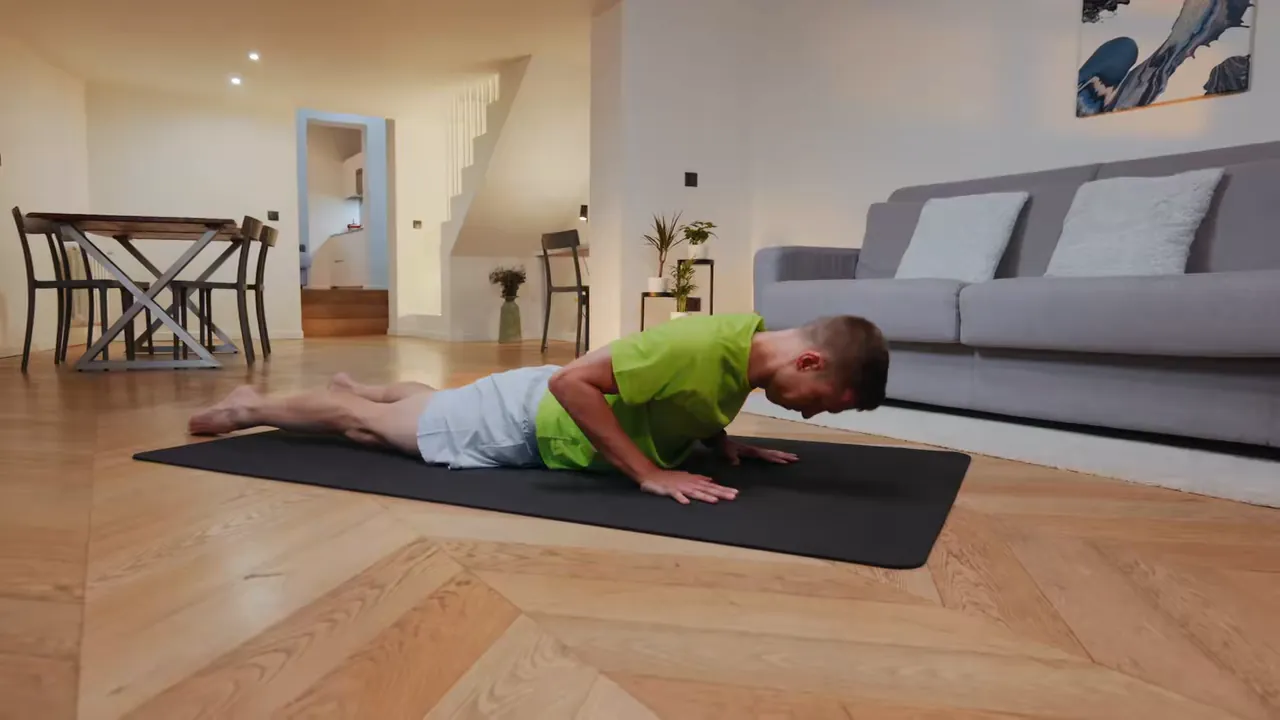
Step 4: Breathe out and lower down slowly.
Keep: Breathe out and lower down slowly, rather than falling back onto the mat.
Avoid: Dropping down
Stills from the exercise video in the Bavelu app, with physiotherapist Mgr. Lukáš Kučera.
How it should feel
A stretch across the front of the chest and stomach, and a sense of your back muscles working as you lift. Your lower back will feel the arch, but it should feel like effort and stretch, never like pinching. Following the breath in the steps, in as you press up and out as you lower, keeps the movement smooth. If you feel sharp or pinching pain in your back, or anything running down a leg, come down and stop.
Gentle pullRight
Your lower back will feel the arch, but it should feel like effort and stretch, never like pinching.
Sharp pain, tingling or numbnessStop
If you feel sharp or pinching pain in your back, or anything running down a leg, come down and stop.
Cobra is one of 4 exercises in Chest Opener
The other three are in the app, guided on video by a physiotherapist. The whole session takes about 8 minutes.
- Sphinx 2:04 · in the app
- Cobra On this page
- Sea Lion 2:26 · in the app
- Shoulders - Arc Over the Head 1:24 · in the app

The cobra stretch, also called cobra pose, is a backbend done lying on your front: you press up through your hands and lift your chest while your pelvis stays on the mat. In the app it belongs to the Chest Opener session, and its stated aim is to open the chest and lengthen the front of the body. It is also a real backbend for the lower back, which is why it deserves a little more care than a stretch you can do in your chair.
What the cobra stretch is designed to do
A day at a screen tends to fold you forward: shoulders in, chest closed, upper back curved. The cobra goes the other way. As you lift, the front of your body lengthens from the hips to the chest, the chest widens and your back arches. That includes the muscles across the front of the chest, such as the pectoralis minor, which pulls the shoulder blade forwards.
Cobra or sphinx?
The app has both. The sphinx is the gentler backbend, resting on your forearms. The cobra goes further, up on your hands. If the cobra feels like too much, the sphinx is the natural step back, and it comes just before the cobra in the Chest Opener session.
The cobra in the app is also not the same as yoga’s upward-facing dog. In the steps above, your elbows stay slightly bent and your pelvis stays on the mat. It is a lift of the chest, not of the whole body.
What it should feel like
A stretch across the front of the chest and stomach, and a sense of your back muscles working as you lift. Your lower back will feel the arch, but it should feel like effort and stretch, never like pinching. Following the breath in the steps, in as you press up and out as you lower, keeps the movement smooth. If you feel sharp or pinching pain in your back, or anything running down a leg, come down and stop.
Mistakes that break the steps
- Straightening the arms. The steps keep your elbows slightly bent. Locked, straight arms push you into a deeper backbend than the exercise asks for.
- Lifting the pelvis. It stays on the mat. Once it comes up, you are doing a different pose.
- Dropping down. The last step is to lower slowly as you breathe out, not to fall back onto the mat.
- Chasing height. Nothing in the steps asks you to go as high as you can. Lift your chest as far as is comfortable today.
Will the cobra stretch fix a hunched back?
It is tempting to think a backbend can undo the hunch. The evidence is less tidy.
- Posture and pain. Writing in a physiotherapy journal, researchers have pointed out that the common belief that back pain comes from sitting or standing “incorrectly” lacks strong evidence, even though a large industry promises to correct posture (Slater et al., 2019). It is a viewpoint rather than a trial, but it matches the reviews covered in our page on the rounded upper back.
- Changing the curve. A meta-analysis of ten randomised trials found that exercise programmes reduced the angle of the upper back curve, the thoracic kyphosis, in the seven trials that measured it. The trials were small, and the authors suggested that strengthening seemed more relevant than stretching for the upper back (González-Gálvez et al., 2019).
So the cobra is a useful counter-movement for a body that spends the day folded forward, but on its own it is not a posture fix. For the upper back, see upper back stretches and posture exercises. For what braces and straps can and cannot do, see do posture correctors work?
Is the cobra good for lower back pain?
There is no trial of the cobra stretch on its own. It is a classic yoga pose, so the nearest evidence is the research on yoga. A Cochrane review of 21 trials with 2,223 people with chronic low back pain found that yoga brought small improvements in pain and function compared with no exercise, below what the authors judged clinically important, and probably little or no difference in function compared with other back exercise. Yoga also had more side effects than no exercise, mostly increased back pain: about 43 in 1,000 people, against 9 in 1,000 with no exercise, though the certainty of that evidence was low (Wieland et al., 2022).
That last point is a fair reminder for any backbend. Some backs are comfortable being arched and others are not. If the cobra makes your back or leg symptoms worse, it is not the right exercise for you at the moment, and lower back stretches or child’s pose may suit you better. For the wider picture, see lower back pain from sitting.
Who should be careful
- Leg symptoms that ease when you bend forward. If pain, numbness or pins and needles in your buttocks or legs come on when you stand or walk and ease when you sit or lean forward, that is a typical pattern of spinal stenosis, a narrowing of the space for the spinal nerves. An NHS physiotherapy leaflet explains that standing straight can narrow that space, while bending forward widens it (NHS Fife). Ask a physiotherapist before doing backbends.
- Sciatica. Pain running from your bottom down the back of one leg, often with tingling or numbness, needs its own advice (NHS).
- Recent back surgery or injury. Check with the team treating you first.
- Pregnancy. Lying on your front gets harder as your bump grows. Ask your midwife or a physiotherapist about floor exercises on your front.
- Osteoporosis or a spinal fracture. The UK consensus statement on exercise for osteoporosis recommends spinal extension exercise to help posture, and specialist advice for exercise after a vertebral fracture (Brooke-Wavell et al., 2022). Ask a physiotherapist which backbend suits you.
- If it hurts, stop. The NHS advises stopping exercises and stretches if your back pain gets worse, and seeing a GP (NHS).
In Bavelu, the cobra sits in the Chest Opener session after the gentler sphinx, and the whole session is designed and filmed by physiotherapists. The rest of the session is listed above, and the full guided video is in the app.
Questions people ask
What does the cobra stretch do?
It is a backbend lying on your front that lengthens the front of the body and opens the chest. In the app it belongs to a chest-opening session for people who spend the day bent forward at a screen. It is designed as a counter-movement, not as a treatment.
What is the difference between the cobra and the sphinx?
The sphinx rests on the forearms and is the gentler backbend. The cobra presses up through the hands and goes further. In the app the sphinx comes just before the cobra in the Chest Opener session, so it is the natural step back if the cobra feels like too much.
Is the cobra stretch good for lower back pain?
It has not been tested on its own. A Cochrane review of yoga for chronic low back pain found small benefits compared with no exercise, and a small number of people found their back pain got worse. If the cobra increases your back or leg symptoms, stop and get advice.
Who should not do the cobra stretch?
Get advice first if you have leg symptoms that ease when you sit or lean forward, sciatica, recent back surgery, osteoporosis or a spinal fracture, or if you are pregnant. Whoever you are, stop if it hurts.
Terms on this page
Sources
- Slater D, Korakakis V, O'Sullivan P, Nolan D, O'Sullivan K. "Sit up straight": time to re-evaluate. Journal of Orthopaedic and Sports Physical Therapy, 2019.
- González-Gálvez N, Gea-García GM, Marcos-Pardo PJ. Effects of exercise programs on kyphosis and lordosis angle: a systematic review and meta-analysis. PLOS ONE, 2019.
- Wieland LS et al. Yoga for chronic non-specific low back pain. Cochrane Database of Systematic Reviews, 2022.
- NHS Fife Musculoskeletal Physiotherapy Service. Spinal stenosis: service user information leaflet, 2014.
- NHS. Sciatica. Last reviewed 3 December 2024.
- Brooke-Wavell K et al. Strong, steady and straight: UK consensus statement on physical activity and exercise for osteoporosis. British Journal of Sports Medicine, 2022.
- NHS. Back pain. Last reviewed 5 March 2026.
This page explains a topic in general terms. It is not a diagnosis and does not replace a doctor or physiotherapist. If something hurts badly, keeps getting worse or comes with numbness, weakness or fever, see a doctor.