Exercises · Lower back
Lower back stretches for people who sit all day
A gentle one to start with, done lying on your back. Below it: what trials of stretching for the lower back found, how this one should feel, and when to get checked first.
Inward Leg Rotation
Letting the knees fall side to side while lying down to loosen the hips and lower back.
- 1:46
- On a mat
- Hips
- Lower Back
Move slowly. Stop if it hurts, or if you feel tingling or numbness.
-
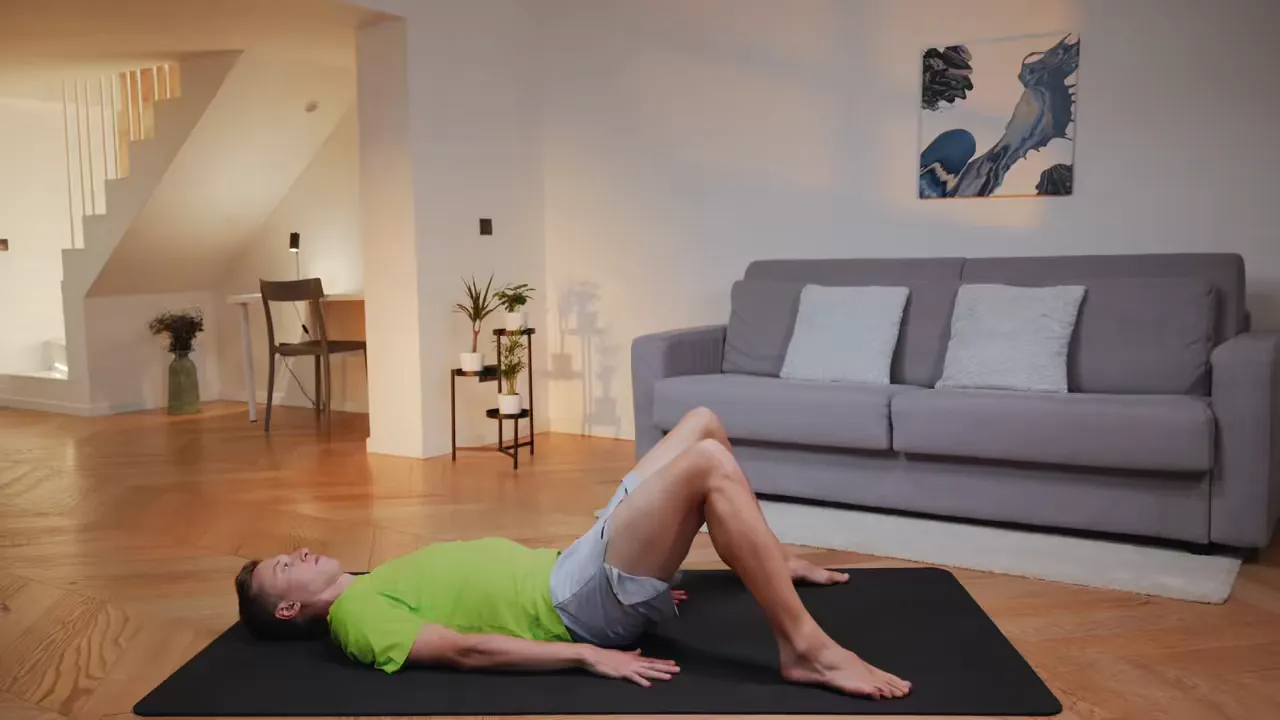
Step 1: Lie on your back, knees bent, feet wider apart.
Keep: Start each time on your back, knees bent and feet wider apart.
Avoid: Skipping the set-up
-
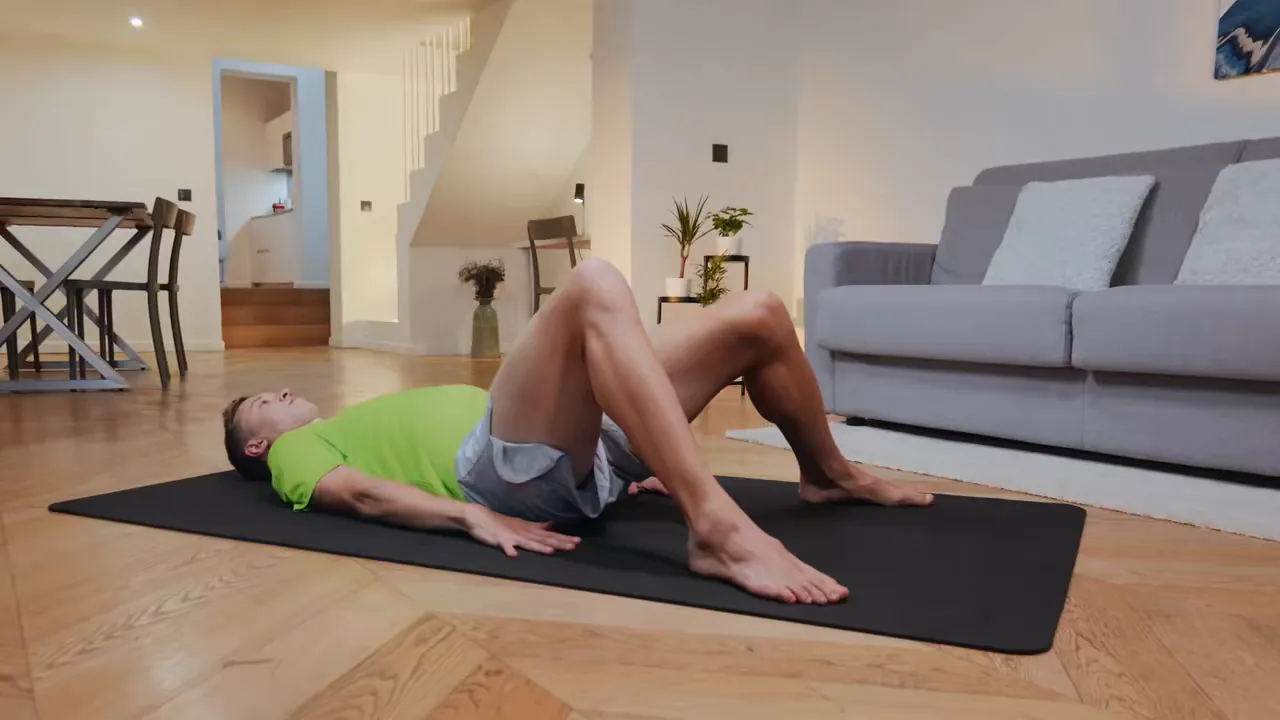
Step 2: Let both knees fall inwards.
Keep: Let both knees fall inwards rather than pushing them down. How far they go is not a score.
Avoid: Forcing it
-
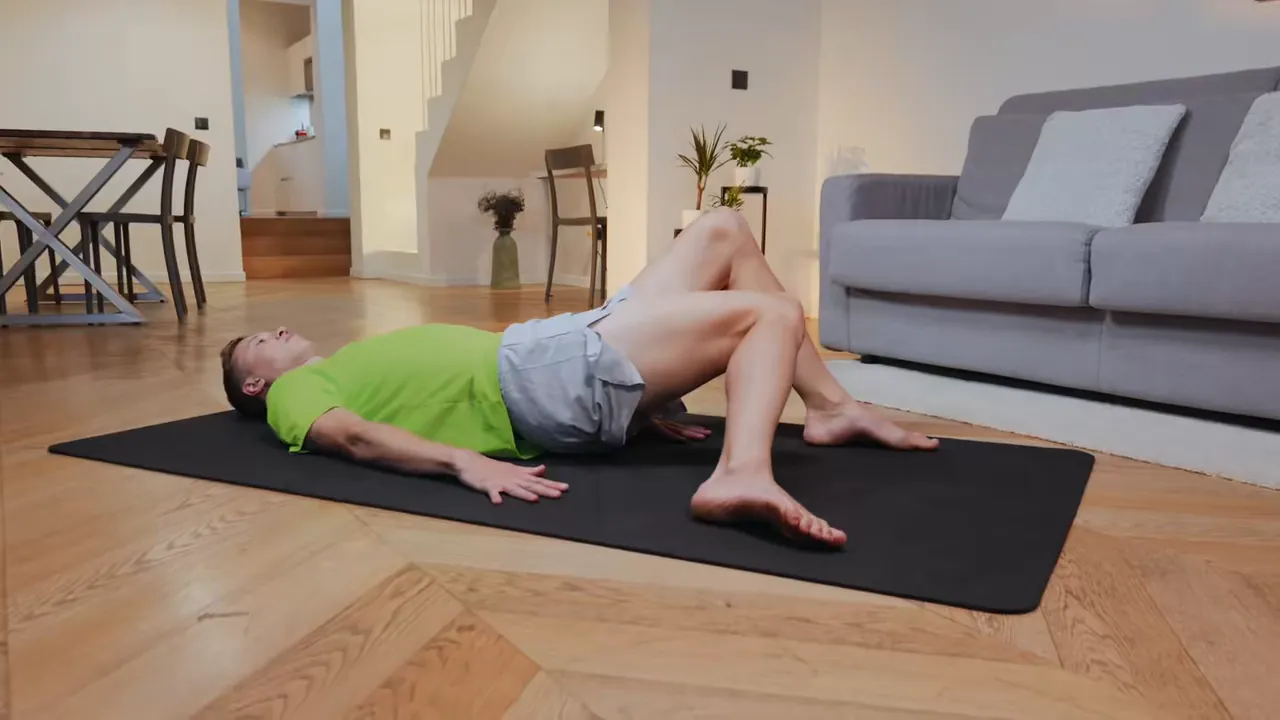
Step 3: Bring them back up slowly and let them fall the other way.
Keep: Bring the knees back up slowly, then let them fall the other way.
Avoid: Rushing
-
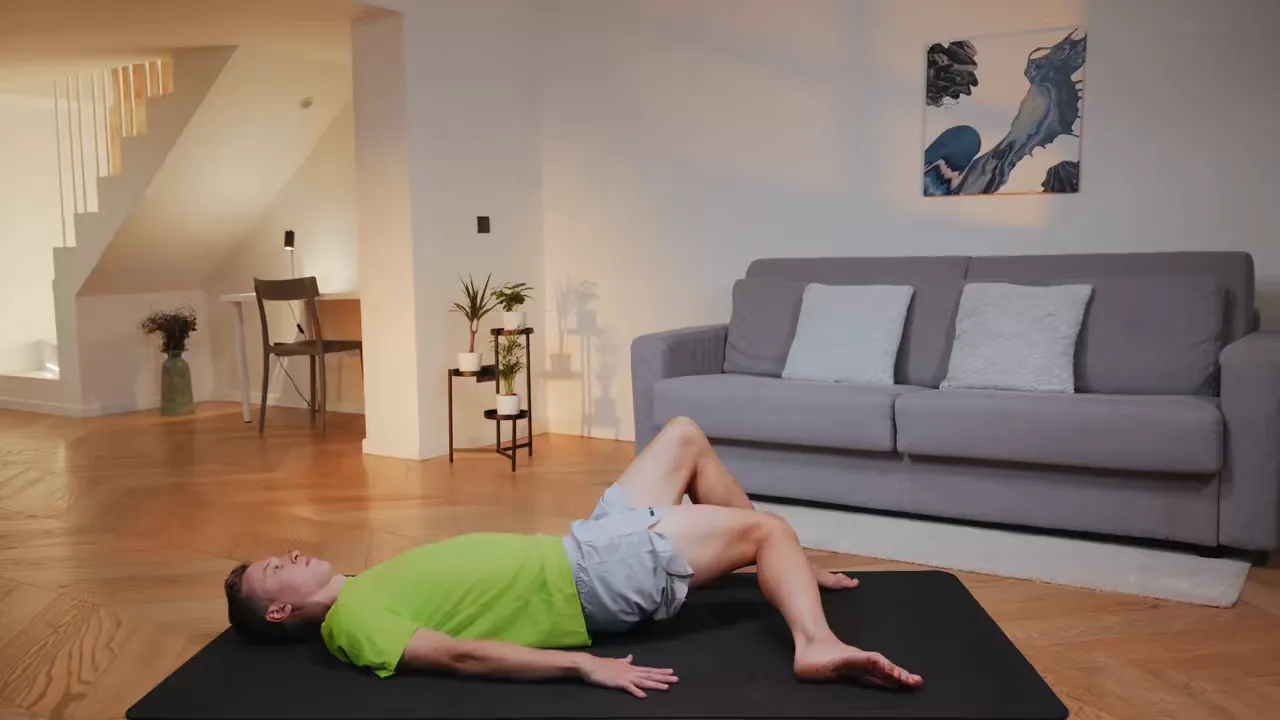
Step 4: Keep the movement smooth and easy.
Keep: Keep the movement smooth and easy, as the last step says.
Avoid: Swinging the knees quicklySwinging them quickly from side to side is a different exercise.
Stills from the exercise video in the Bavelu app, with physiotherapist Mgr. Lukáš Kučera.
How it should feel
"Keep the movement smooth and easy" is the last of the steps above, and it is the best test. You should feel gentle movement around your hips and lower back and, at most, a mild stretch. Sharp pain, pain that builds with each round, or anything spreading into a leg are signs to stop.
Gentle pullRight
Gentle movement around your hips and lower back and, at most, a mild stretch.
Sharp pain, tingling or numbnessStop
Sharp pain, pain that builds with each round, or anything spreading into a leg are signs to stop.
Inward Leg Rotation is one of 4 exercises in Hips and Lower Back
The other three are in the app, guided on video by a physiotherapist. The whole session takes about 11 minutes.
- Pigeon 4:12 · in the app
- Frog 2:38 · in the app
- Reclined Pigeon 2:34 · in the app
- Inward Leg Rotation On this page

If you sit for most of the day, the lower back is often the first place to complain: a dull ache low down that builds through the afternoon, and stiffness when you finally stand up. Lower back stretches are the obvious thing to look for, and the one above is a gentle place to start. It is Inward Leg Rotation, the last exercise in Bavelu’s Hips and Lower Back session, and the app describes it simply as “letting the knees fall side to side while lying down to loosen the hips and lower back.”
This page covers what stretching can realistically do for a back that spends all day in a chair, how this stretch should feel, and who should check with a doctor or physiotherapist first.
Do lower back stretches help?
They can be part of what helps. One of the clearest trials of stretching for the lower back is encouraging, with some caveats.
In a US trial, 228 adults with long-term low back pain were randomly given 12 weekly 75-minute classes of yoga, 12 weekly classes of conventional stretching, or a self-help book. The stretching classes were led by physical therapists and mostly stretched the trunk and legs, with four strengthening exercises added. Everyone in the classes was also asked to practise for 20 minutes at home on the other days. Compared with the book, the stretching group had better back-related function at 6, 12 and 26 weeks, and it did as well as yoga. At 12 weeks, 52% to 56% of people in the two class groups had improved by at least half on a disability questionnaire, against 23% of those with the book (Sherman et al., 2011).
Two limits are worth knowing. That was far more than one stretch: over an hour a week in a class, plus home practice. And it was not free of side effects: 13 people in each class group reported a mild or moderate one, mostly more back pain.
The wider research points the same way. A Cochrane review of 249 trials found moderate-certainty evidence that exercise reduces pain in low back pain lasting more than 12 weeks, by about 15 points on a 100-point scale compared with no treatment, usual care or placebo. The effect on day-to-day function was smaller, below the authors’ threshold for a clinically important change (Hayden et al., 2021). The NHS advice for back pain is to stay active, try exercises and stretches, and stop if your pain gets worse (NHS).
So stretching is a reasonable part of looking after your back, not a fix on its own. If you are in the middle of an episode, Will back pain go away on its own? explains what usually happens next, and lower back pain from sitting looks at whether the chair is really to blame.
Why a lower back stretch that moves the hips?
Desk workers often feel the ache over the erector spinae, the long muscles either side of the spine, although it is rarely possible to say which structure is the source. The app lists both the hips and the lower back as the areas this exercise targets, and the name says what happens at the hip: as the knees fall in, the thighs turn inwards.
That is a movement researchers have looked at in people with back pain. A review of 24 studies comparing people with and without non-specific low back pain found that limited inward rotation of the hip was the only hip movement significantly linked with back pain. The authors rated the evidence as very low quality, and a link like this cannot show that moving the hip more changes back pain (Avman et al., 2019). So it is an interesting link, not a promise.
How it should feel
“Keep the movement smooth and easy” is the last of the steps above, and it is the best test. You should feel gentle movement around your hips and lower back and, at most, a mild stretch. Sharp pain, pain that builds with each round, or anything spreading into a leg are signs to stop.
The usual mistakes all break one of the steps:
- Rushing. The steps ask you to bring the knees back up slowly and keep the whole movement smooth. Swinging them quickly from side to side is a different exercise.
- Forcing it. The steps say to let the knees fall, not to push them down. How far they go is not a score.
- Skipping the set-up. The first step has you on your back with the knees bent and the feet wider apart. Start from there each time.
In the app the exercise takes just under two minutes, and its length is shown above.
Where it fits in a day of sitting
This is a floor exercise, so it suits the start or end of the day rather than the middle of a meeting. In the app, the Hips and Lower Back session sits with the evening wind-down routines, and Inward Leg Rotation comes after Pigeon, Frog and Reclined Pigeon. Pigeon pose has its own page.
During the workday, breaking up long spells in one position is the other half of the picture. Short, frequent breaks are covered in microbreaks, and Is two minutes of exercise enough? explains why the lower back seems to need more time than the neck. For something you can do without leaving your chair, see hip stretches and desk stretches. Stretching is also only one kind of exercise: if you want movements that work the spine and the muscles around it, the cat-cow stretch and the glute bridge have their own pages.
Who should be careful
Stop if it hurts. A gentle stretch is fine; sharp pain, pain that gets worse as you go, or new pain afterwards is not. The NHS advice is to stop if exercises make your back pain worse and to see a GP (NHS).
Check with a doctor or physiotherapist before you start if:
- pain, tingling or numbness runs into a leg. That can be sciatica, which usually affects the bottom and the back of one leg, often down to the foot (NHS). No stretch on this page is a treatment for it. Get it assessed, especially if it has not improved after a few weeks of home treatment or is getting worse.
- you have had recent back or hip surgery, or a recent injury. Follow the exercises your own physiotherapist gave you and ask before adding new ones. After a hip replacement, for example, the NHS advises following your physiotherapist’s exercises, not sitting with your legs crossed and not bending the hip more than 90 degrees while it recovers (NHS).
- you are pregnant. This exercise is done lying on your back. In later pregnancy, the NHS advises avoiding any activity that involves lying flat on your back for more than a few minutes, because it can make you feel dizzy and is not good for your baby (NHS). Your midwife can tell you what suits you.
Call 999 or go to A&E if back pain comes with pain, tingling, weakness or numbness in both legs, loss of feeling around your genitals or anus, changes in bladder or bowel control, or chest pain, or if it started after a serious accident. Ask for an urgent GP appointment or call 111 if you feel hot, cold, shivery or generally unwell with it, or the pain is severe and came on suddenly (NHS). If you are thinking of seeing a physiotherapist privately, how much physiotherapy costs sets out the options.
The rest of the Hips and Lower Back session is listed above. Bavelu’s sessions are designed and filmed by physiotherapists, led by Mgr. Lukáš Kučera, and the full session is guided on video in the app. It is exercise guidance, not a diagnosis or a treatment.
Questions people ask
What is the best stretch for lower back pain?
No single stretch has been shown to be the best. The trials that found benefits tested whole programmes, such as weekly stretching classes with practice at home, rather than one movement. A gentle stretch you can do comfortably and keep doing is a sensible start, and it should be stopped if it makes the pain worse.
Do stretches help lower back pain from sitting?
They can be part of it. In a trial of 228 adults with long-term low back pain, 12 weeks of stretching classes improved back-related function more than a self-help book, and as much as yoga. Exercise in general has moderate-certainty evidence for easing long-term back pain, but the effects are modest and no stretch is a cure.
Should I stretch my lower back when it hurts?
The NHS suggests staying active and trying exercises and stretches for back pain, and stopping if your pain gets worse. Get urgent help if back pain comes with numbness or weakness in both legs, numbness around the genitals or bottom, or changes in bladder or bowel control.
Can I do lower back stretches if I have sciatica?
Get pain that runs down your leg assessed first. Sciatica has several causes, and a GP or physiotherapist can tell you which exercises suit you. Sciatica in both legs, or numbness around the genitals or bottom, needs A&E straight away.
Terms on this page
Sources
- Sherman KJ, Cherkin DC, Wellman RD, Cook AJ, Hawkes RJ, Delaney K, Deyo RA. A randomized trial comparing yoga, stretching, and a self-care book for chronic low back pain. Archives of Internal Medicine, 2011.
- Hayden JA, Ellis J, Ogilvie R, Malmivaara A, van Tulder MW. Exercise therapy for chronic low back pain. Cochrane Database of Systematic Reviews, 2021.
- NHS. Back pain. Last reviewed 5 March 2026.
- Avman MA, Osmotherly PG, Snodgrass S, Rivett DA. Is there an association between hip range of motion and nonspecific low back pain? A systematic review. Musculoskeletal Science and Practice, 2019.
- NHS. Sciatica. Last reviewed 3 December 2024.
- NHS. Recovering from a hip replacement. Last reviewed 6 March 2024.
- NHS. Exercise in pregnancy. Last reviewed 24 September 2026.
This page explains a topic in general terms. It is not a diagnosis and does not replace a doctor or physiotherapist. If something hurts badly, keeps getting worse or comes with numbness, weakness or fever, see a doctor.